

LOWER COOK INLET
MOOSE COMPOSITION
Projects & Studies
Lower Cook
Inlet Moose
Composition Study
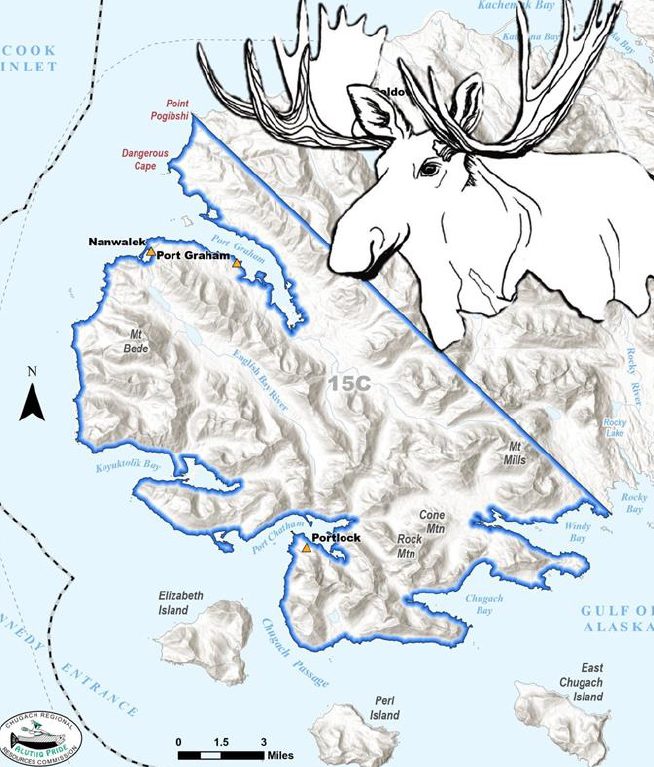
Moose in the Lower Cook Inlet are an important food security staple to Port Graham and Nanwalek. Over the past several years, Port Graham and Nanwalek Tribal Members have expressed concern about moose populations, including species health, impacts of changing environmental/climate conditions, and resource competition/interference with commercial and subsistence fisheries and how that affects their subsistence use of moose. The Alaska Department of Fish and Game (ADF&G) conducted moose counts in 2011, 2015, and 2017, and results ranged from 10 to 48, which represents minimum counts in the area. Directed by our member Tribes and funding from a Tribal Wildlife Grant through the US Fish and Wildlife Service, CRRC will be assisting in accessing the moose populations of the Lower Cook Inlet area for Tribal customary and traditional uses.
CRRC will be working
to accomplish these
goals to enhance moose
stewardship in the
Lower Cook Inlet:

Build capacity toward Tribal self-sufficiency in resource management.
Conservation of the moose population in the Lower Cook Inlet and their habitat.
Address Tribal concerns over moose data gaps in the Lower Cook Inlet by investigating the gaps and updating the information necessary for the Alaska Department of Fish and Game to manage the moose population.
Aerial Surveying
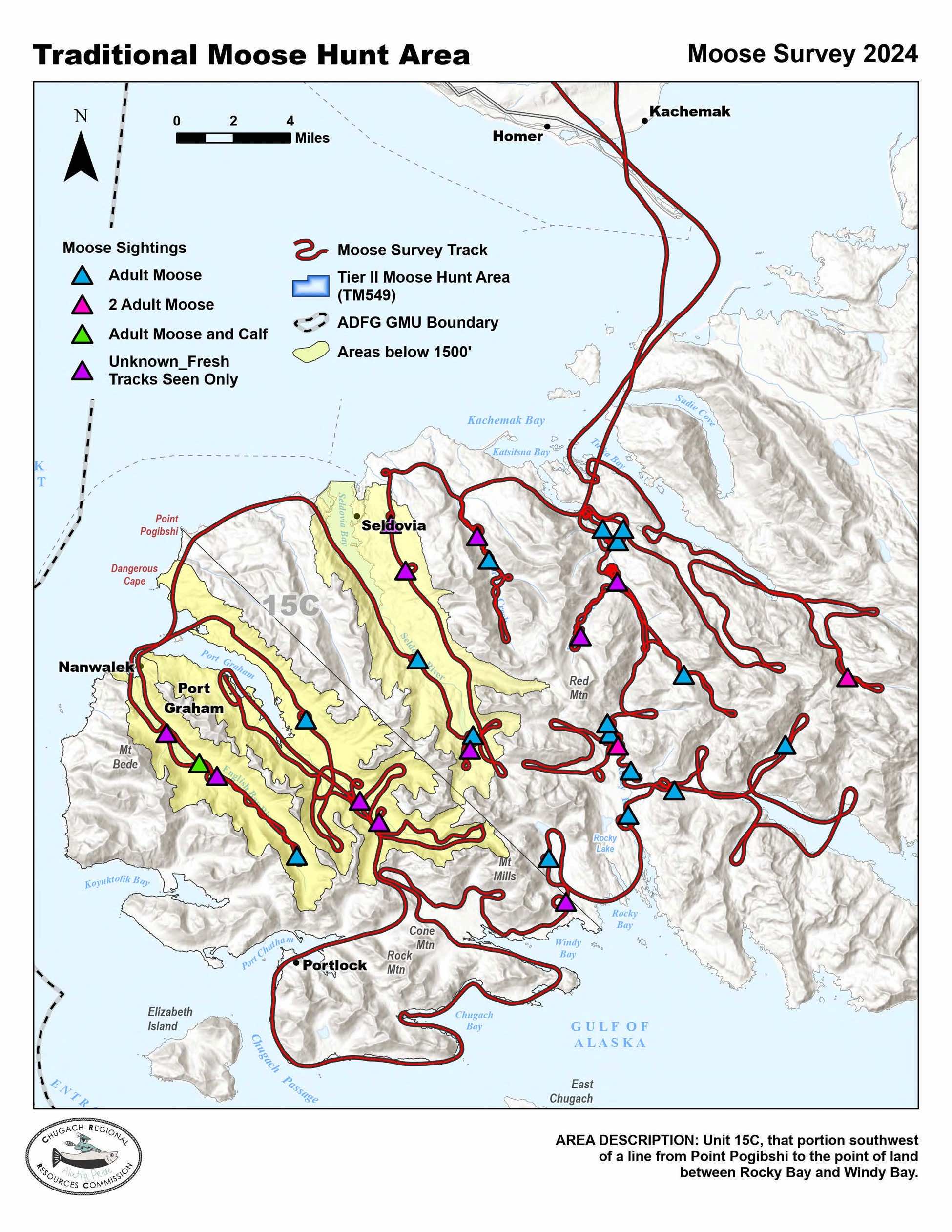
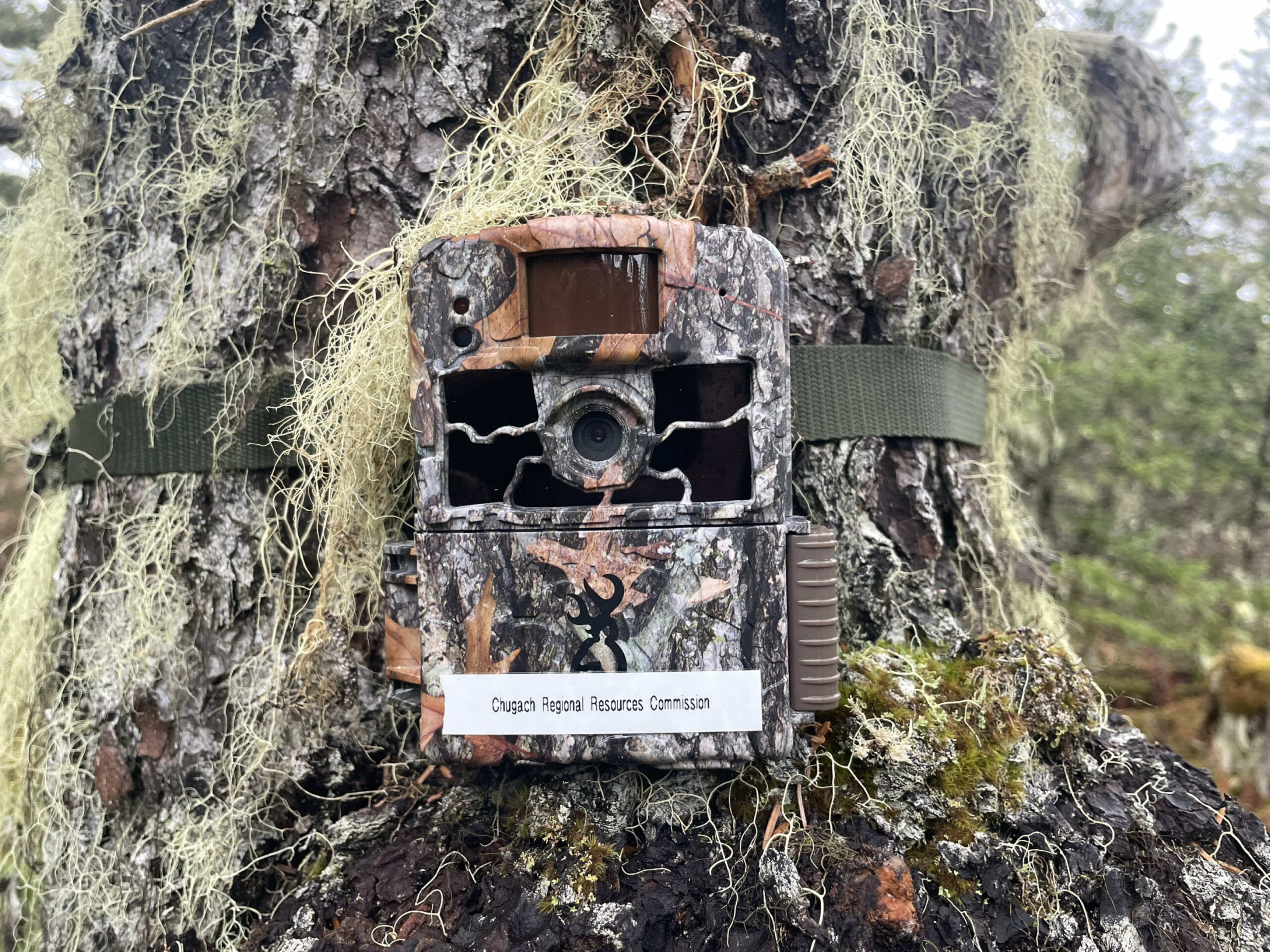
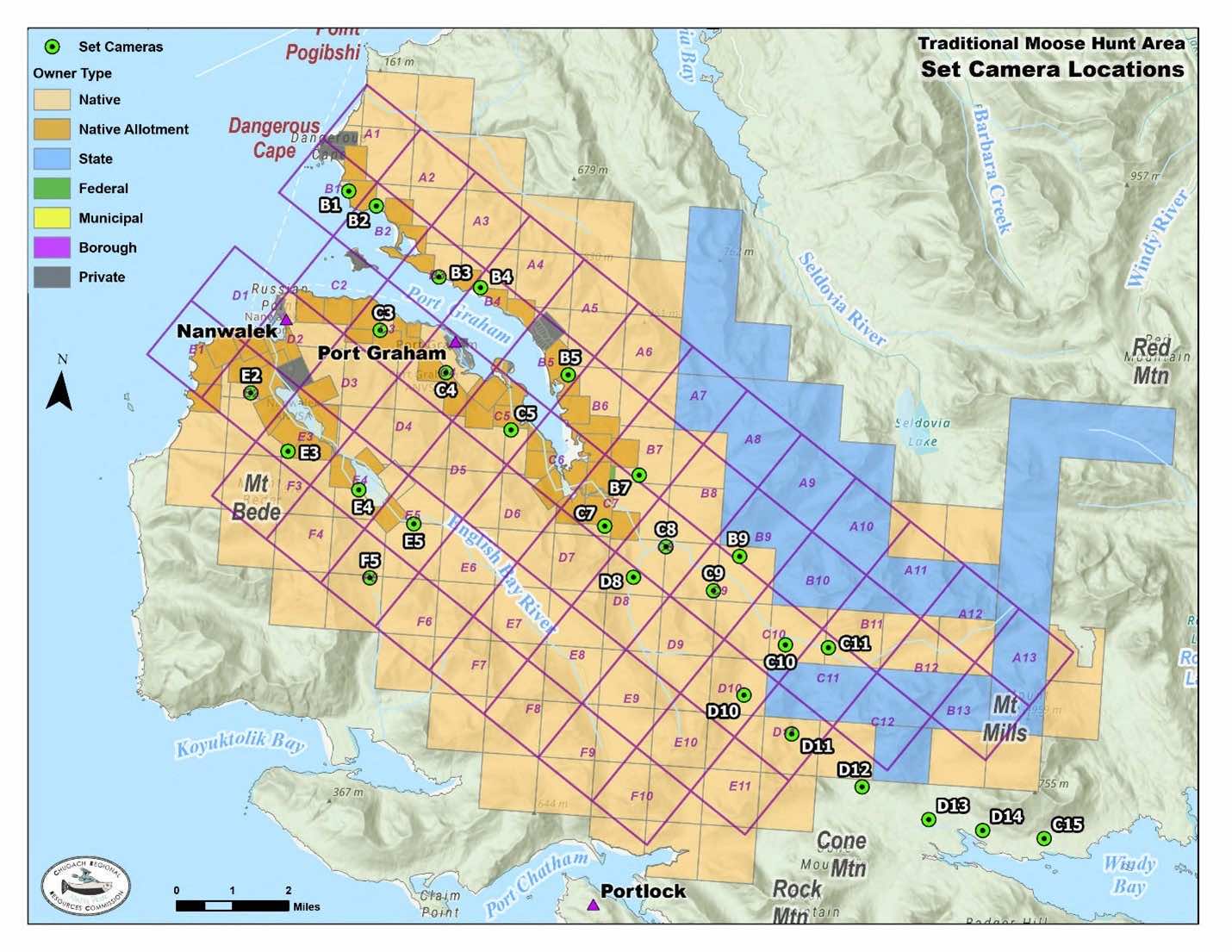
CRRC completed an aerial survey on March 14, 2024, resulting in 21 adults and 1 calf counted, and updated ADF&G with the count. Due to topography and trees, ADF&G estimates that up to 30% of the moose may be missed. During CRRC’s survey, there were at least 12 fresh moose tracks that could not be accounted for due to the topography and trees, so CRRC deployed a game camera project to form a better understanding of the moose population.
Game Camera Monitoring
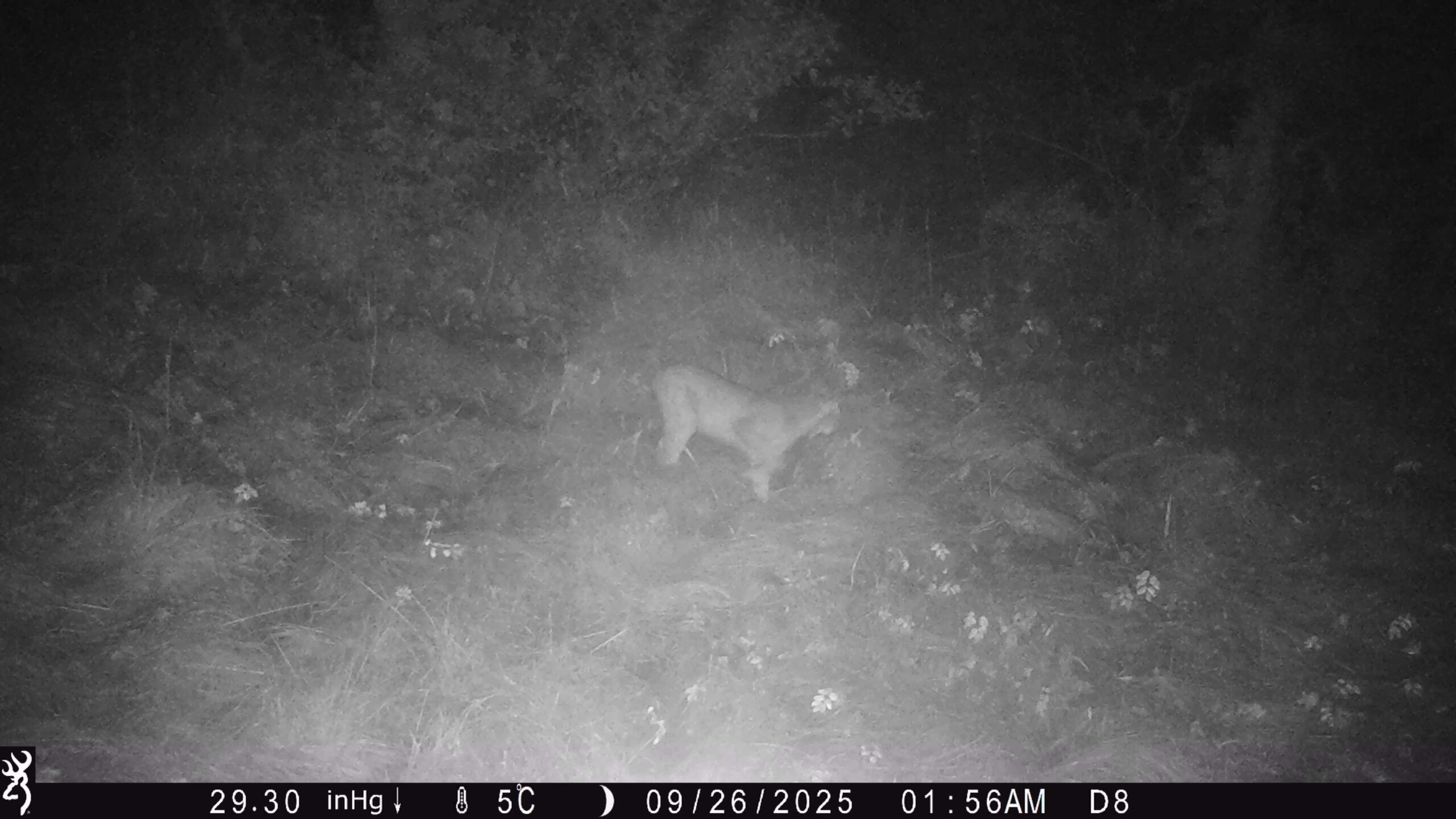
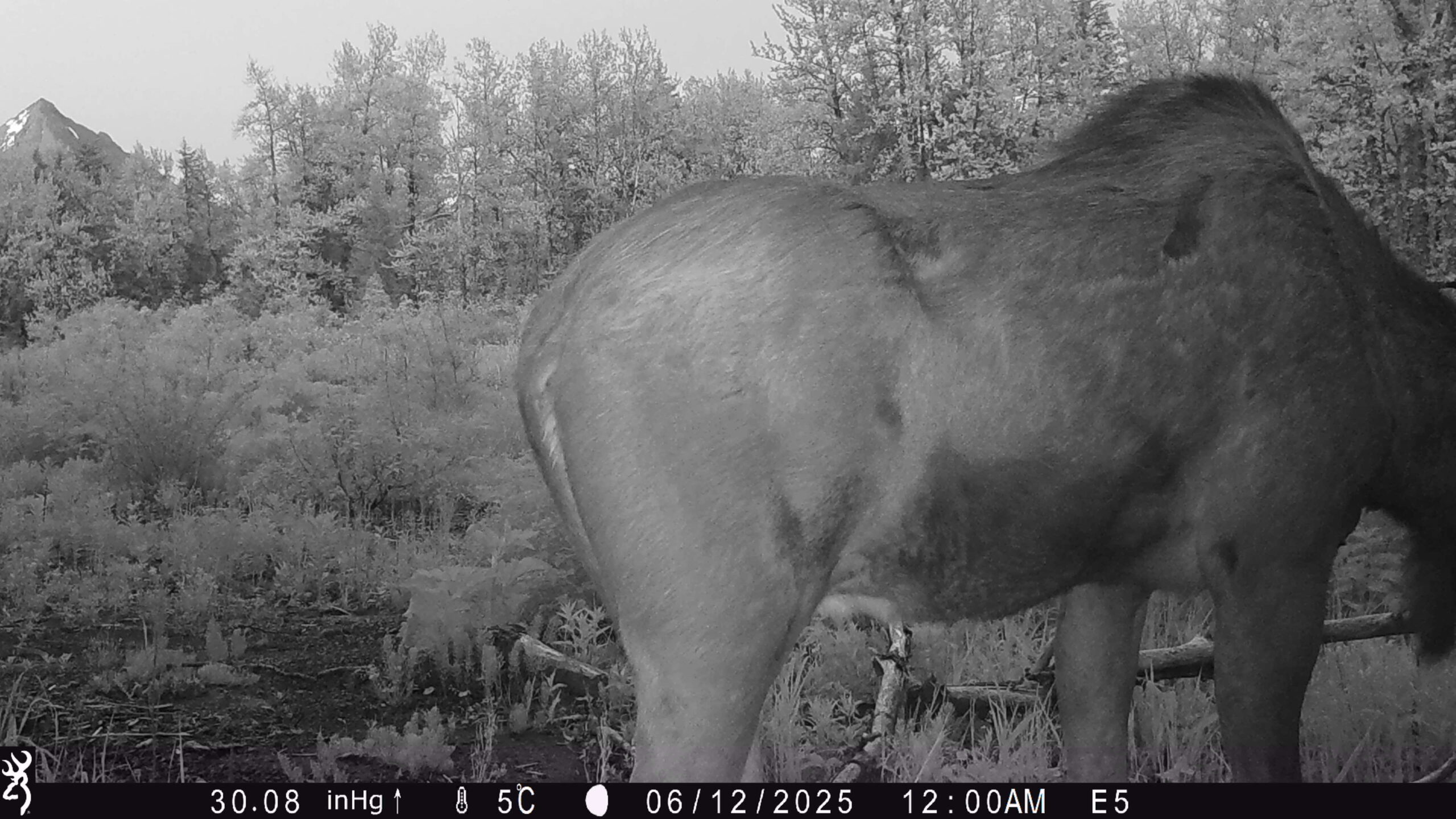
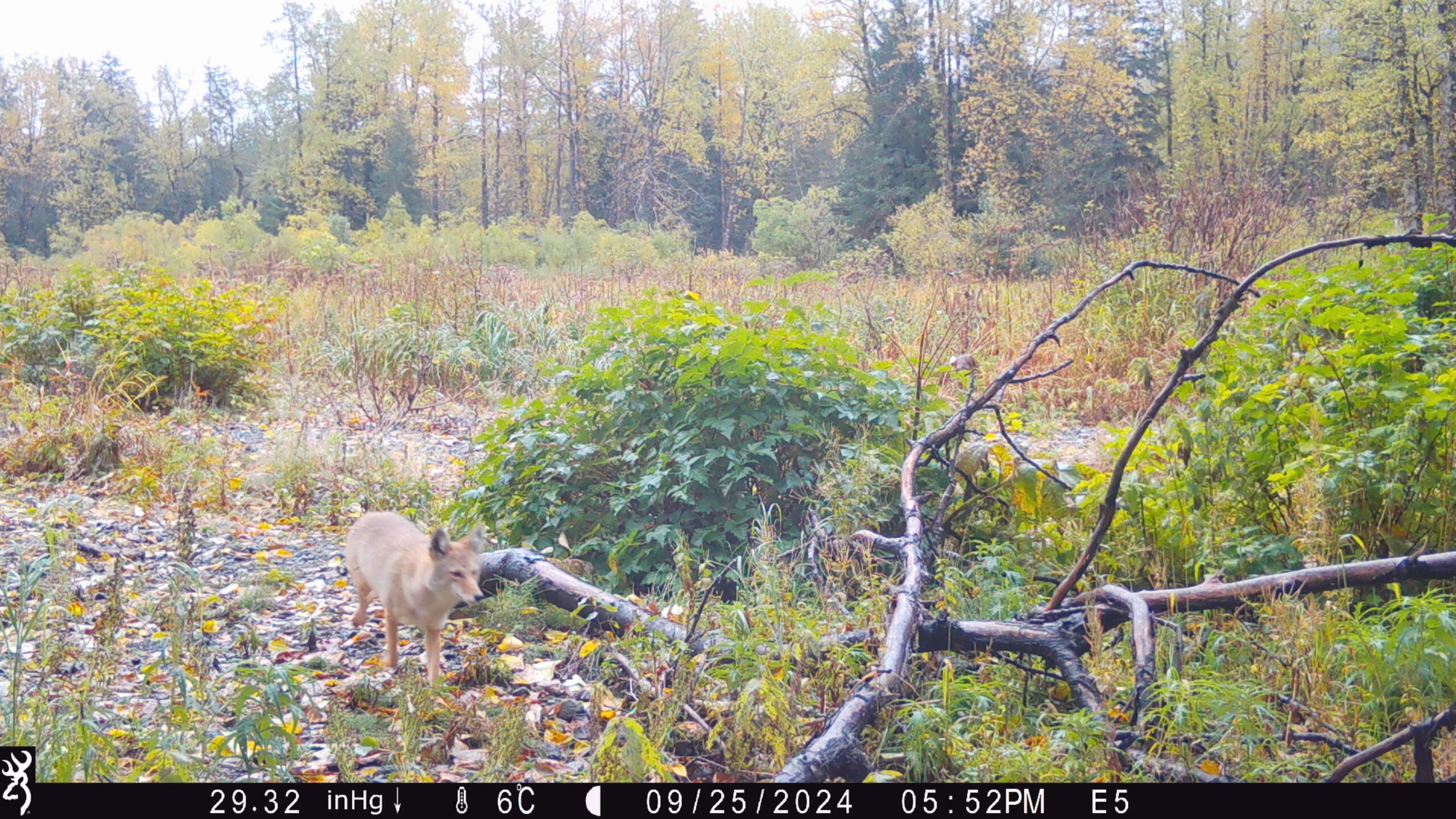
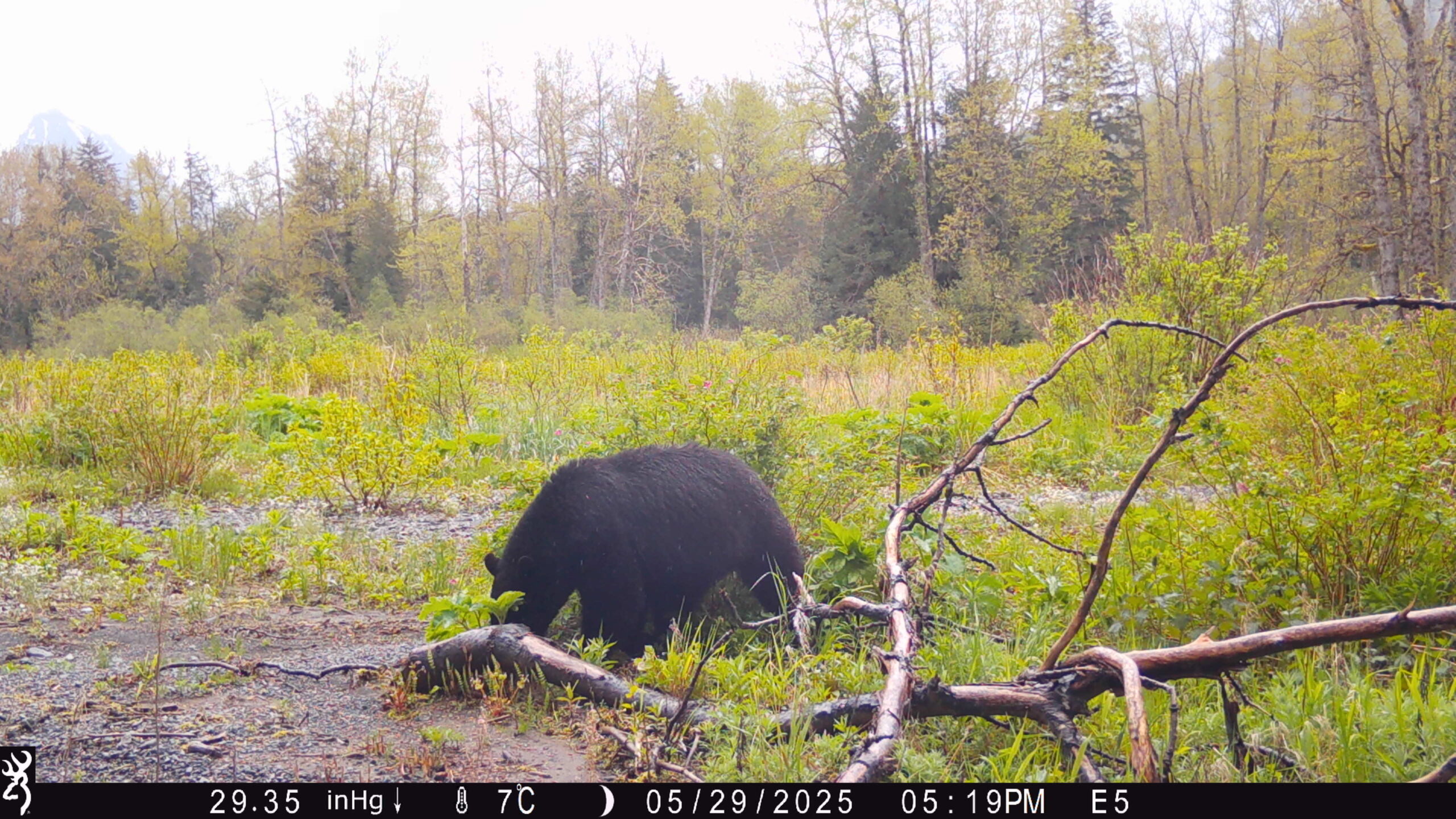
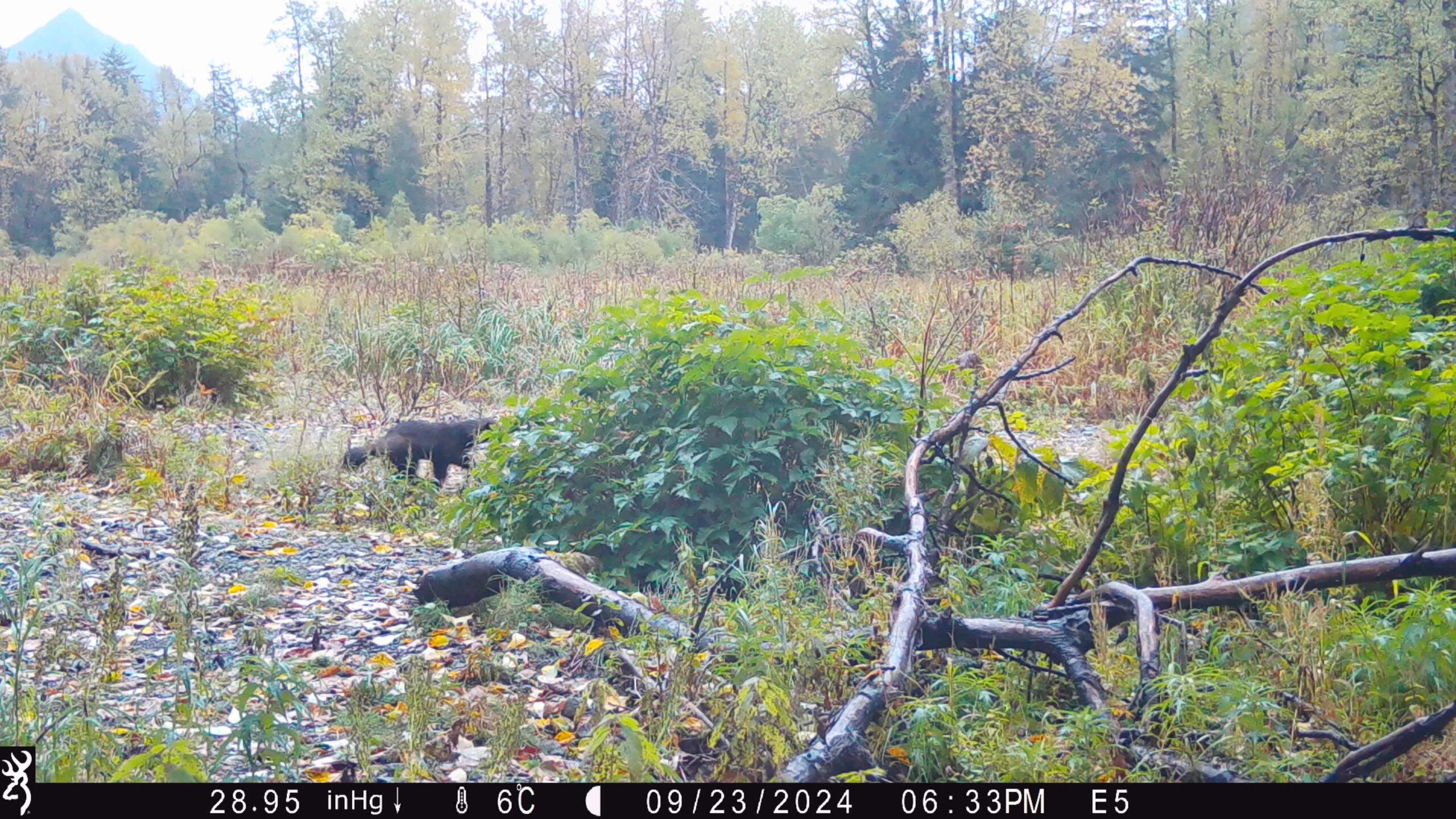
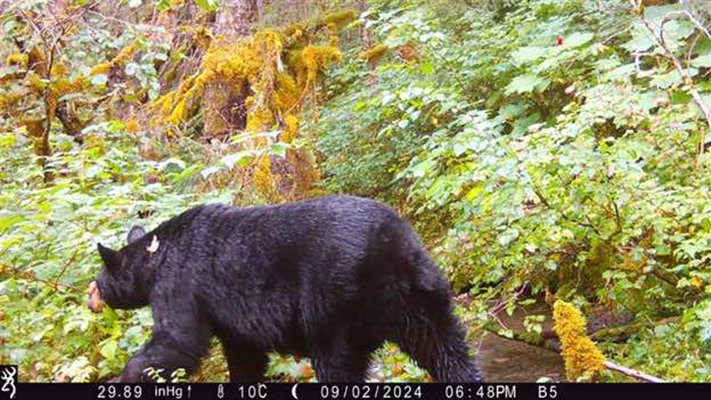
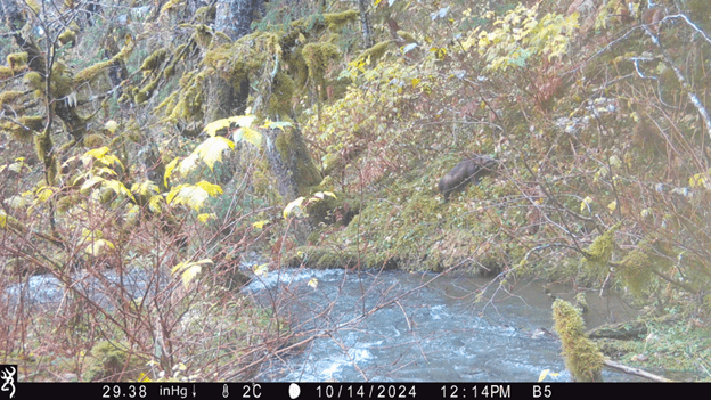
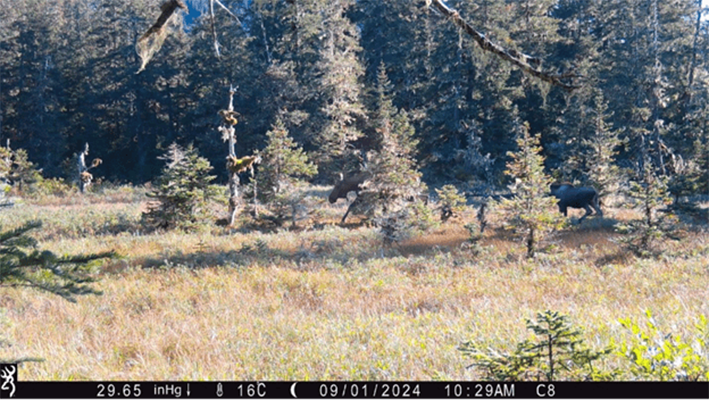
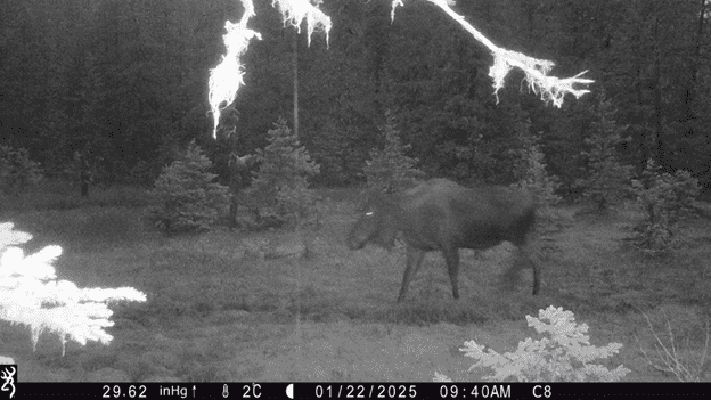
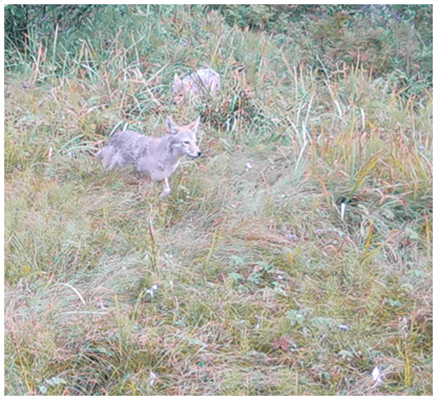
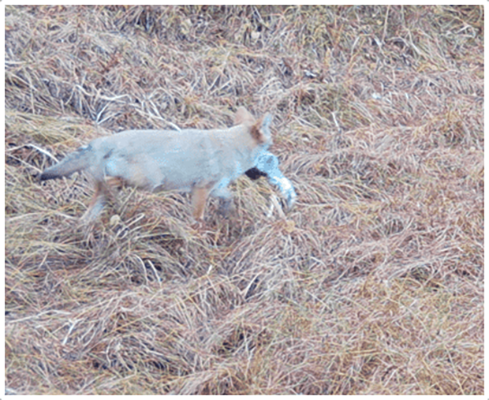
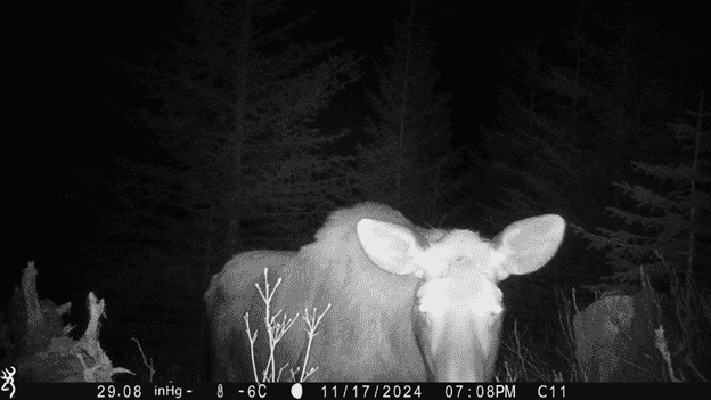
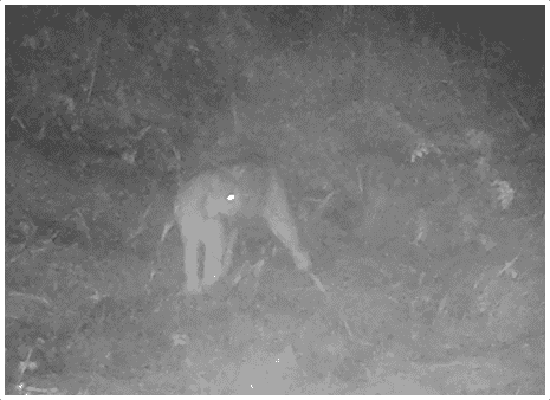
Moose photos were successfully captured in the sites where traditionally spotted by the local residents, along with bears, coyotes, lynx, and wolverine photos.
After recovery of all photographic data, CRRC will parse through all recorded camera trap data and record the counts, estimate abundance, and calculate density using a recommended suite of statistical models to generate accurate and realistic predictions, and avoid biases a single top-ranked model may produce.
Traditional Moose Hunting
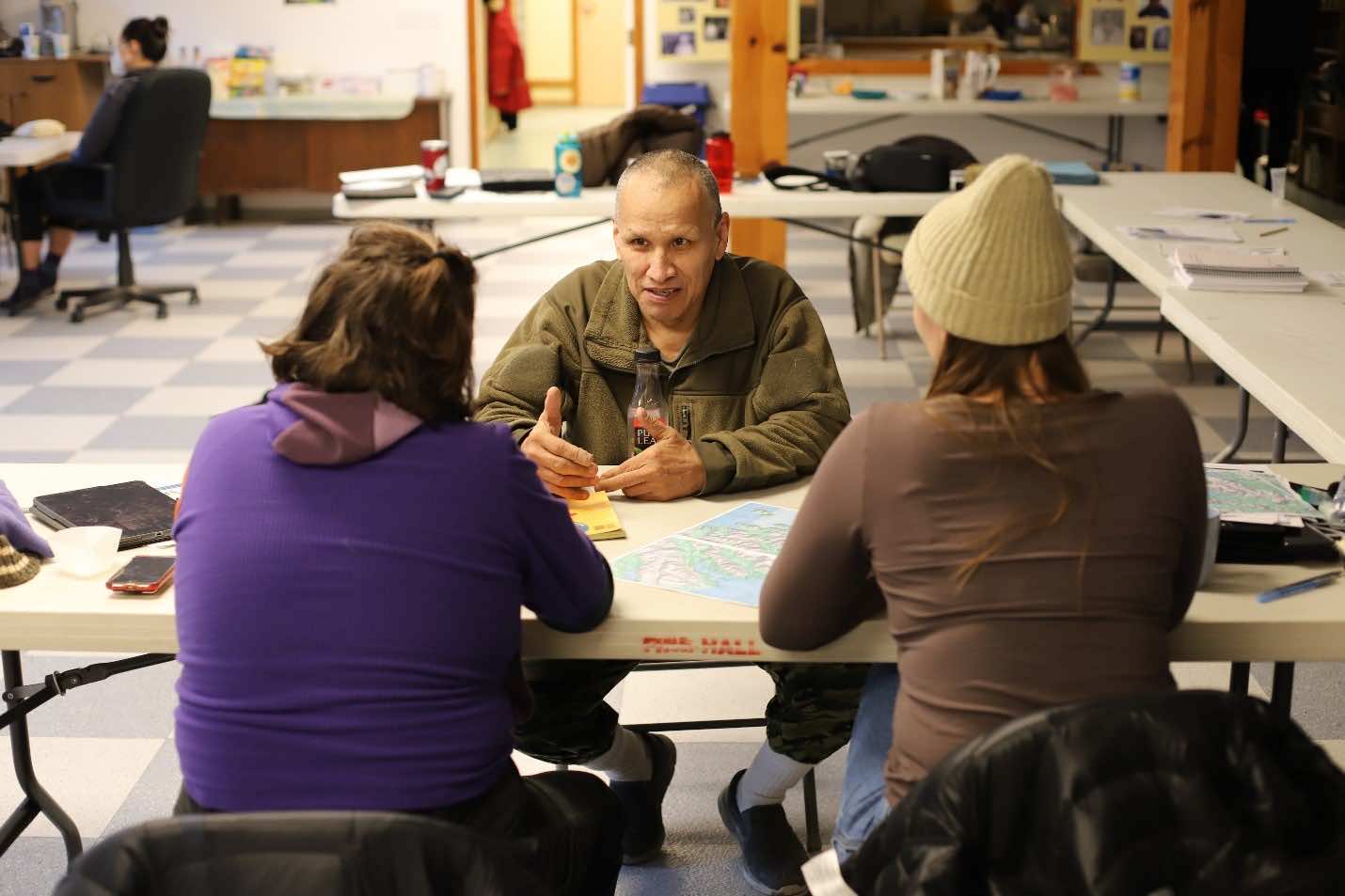
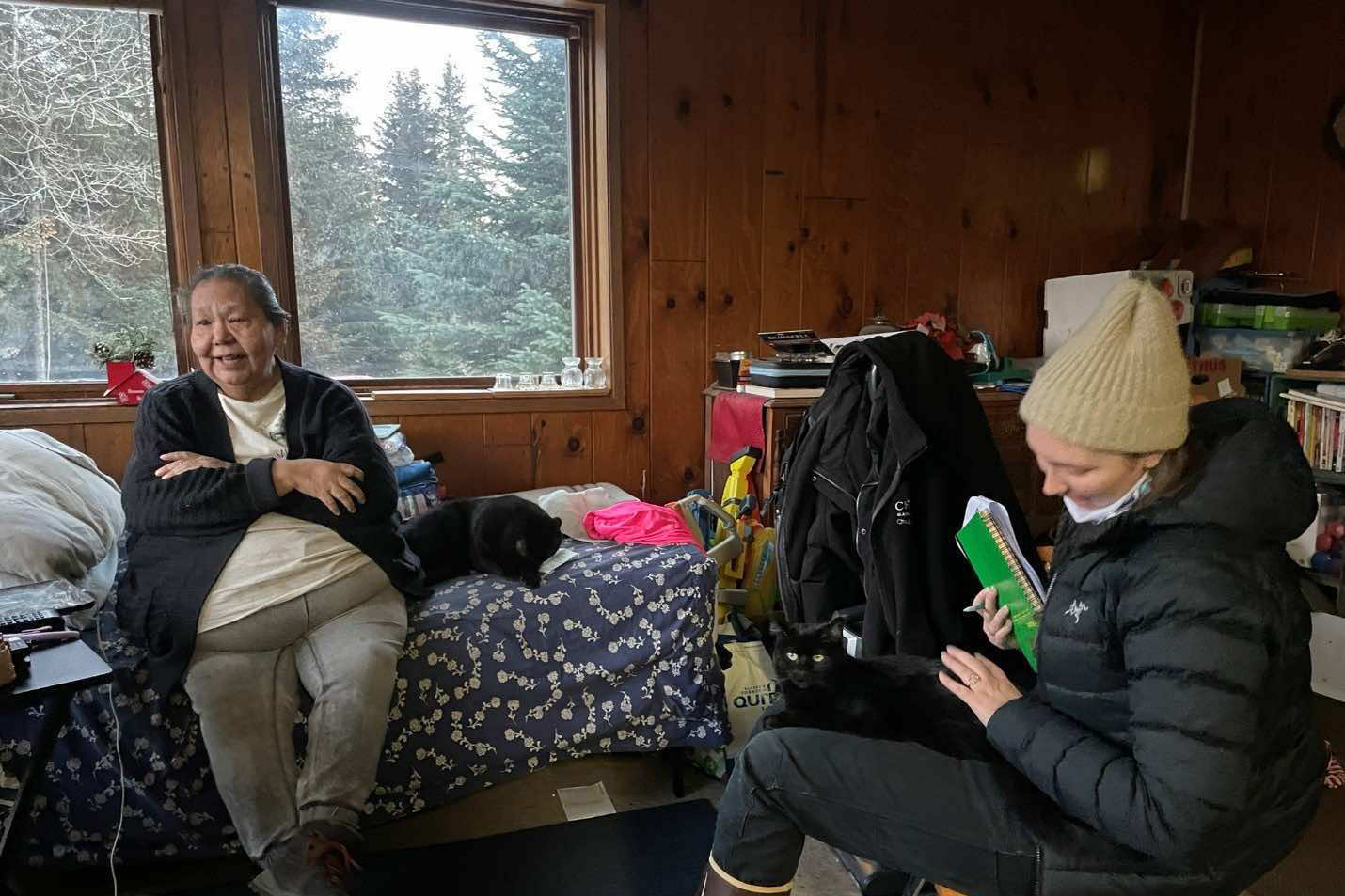
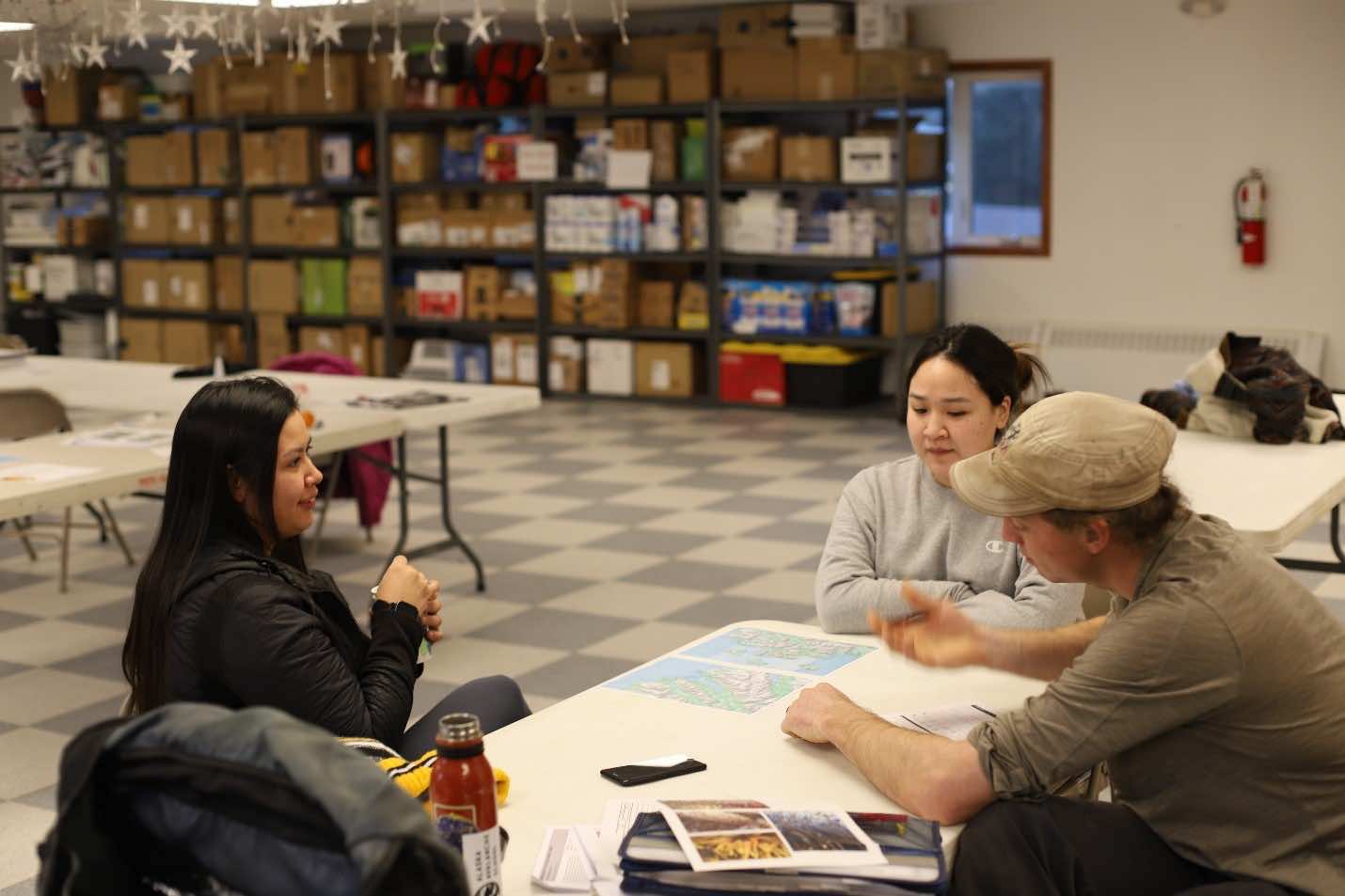
CRRC completed ethnographic interviews with technical assistance from Alaska Department of Fish and Game’s Subsistence Division. CRRC staff participated in a training workshop focused on collecting Traditional Ecological Knowledge (TEK). CRRC and ADF&G visited Port Graham to interview and record moose hunters for their stories about current hunting practices, past hunting practices, and what they want to see for future moose hunters. CRRC and ADF&G reviewed the transcripts and maps with each interviewee for approval and presented the data to the community. Henry Huntington gathered more information about moose hunting in these communities to compliment the data collected and CRRC wrote a report summarizing the project results. The report has been submitted to the Native American Fish and Wildlife Society’s journal “From the Field” for publishing and is currently in the peer review process. The publishment will be distributed to Port Graham and Nanwalek when available.

Publications & Resources
Hunting and Using Moose (Tegllit) in Nanwalek and Port Graham, Alaska
Dustin Carl, Christian Woodard, Henry P. Huntington, and Willow Hetrick-Price. n.d. https://tinyurl.com/5h6wafd4
Moose (tegllit in Sugt’stun/Alutiiq) have always been part of the traditional food system in Nanwalek and Port Graham, Alaska. These two communities rely on a few moose per year, which are shared among many community members to supplement the food in their freezers over the winter. Despite generations of traditional knowledge, the tribes are required to follow rules and regulations set by governing bodies that do not always recognize this knowledge. Here, we present archaeological, ethnographic, and biological information about the role of moose in the Sugpiat communities of Nanwalek and Port Graham and demonstrates customary and traditional patterns of use by residents of both communities. This study provides evidence from moose bones and antlers found in archaeological sites across the surrounding region, spatial data for current and previously used harvesting areas, harvest survey results from 1987-2017, oral stories of moose hunting, methods for storing and preparing moose, and sharing and other cooperation involving moose. We provide a summary of the importance of moose in the culture of Nanwalek and Port Graham, and highlight the multi-generational activities of moose hunting, harvesting, processing and sharing as a source of connection to land and waters around the community. Although these communities are now restricted to the hunt area established by the governing bodies, their goal is to harvest their subsistence moose on the entirety of their traditional homelands.

Link to: From the Field | Elevating Indigenous Voices
https://tinyurl.com/mrx3pnfk
Abundance and Sex Composition of Moose on the lower Kenai Peninsula, Alaska
Report by: Daniel R. Eacker, Lead Consultant, Taurus Wildlife Consulting | Rick Merizon, Tribal Wildlife Biologist, Chugach Regional Resources Commission | Dustin Carl, Tribal Fish and Wildlife Dept. Director, Chugach Regional Resources Commission
Accurate estimates of moose ab undance and sex composition are critical for sustainable management in southern Game Management Unit (GMU) 15C near Port Graham and Nanwalek, Alaska. To improve population estimates, motion-triggered game cameras were deployed between August 2024 and April 2026, with Bayesian models used to estimate abundance, sex ratios, recruitment, and habitat use.
The study estimated 23 adult moose (21 females, 2 males; 95% BCI = 12–75) across the 293.3 km² study area, or approximately 0.1 moose/km². The estimated bull ratio was 8:100, well below the 20–25 bulls per 100 cows objective typically used for sustained harvest. Recruitment was also extremely low, with only 3 yearlings and no calves detected.
Moose were strongly associated with high-quality habitat and fresh water and negatively associated with black bear abundance. Given the existing harvest limit of 3 bulls under permit hunt TM549, low abundance and recruitment appear more closely associated with predation and environmental constraints than hunter harvest. Protecting key habitat and further evaluating predator-prey dynamics should be priorities for supporting local moose population resilience.