TRIBAL FISH & WILDLIFE
Meet the Team
Subsistence
Marine Mammals
Fisheries
Wildlife
Regulations
Migratory Birds
Serving the Chugach Region Through Knowledge, Stewardship and Support
Mission Statement:
Focused on Alutiiq tribal lands in the western Prince William Sound region of Southcentral Alaska, this interactive resource connects patterns of subsistence use with where specific habitat types are located in the Chenega region.
Meet Our Team
Dedicated to serving the Chugach Region
Our team is passionate about strengthening local capacity, empowering community knowledge, and supporting the subsistence ways of life that connect people to the land, water, and to one another. We are committed to listening first, working together, and helping communities overcome challenges with practical support and innovative ideas.

Dustin Carl
Tribal Fish & Wildlife Director

Christine (Brummer) DeWeese
Tribal Fish & Wildlife Coordinator

Hanna Hellen
Tribal Marine Mammal Biologist

Madeline Lee
Tribal Fish Biologist
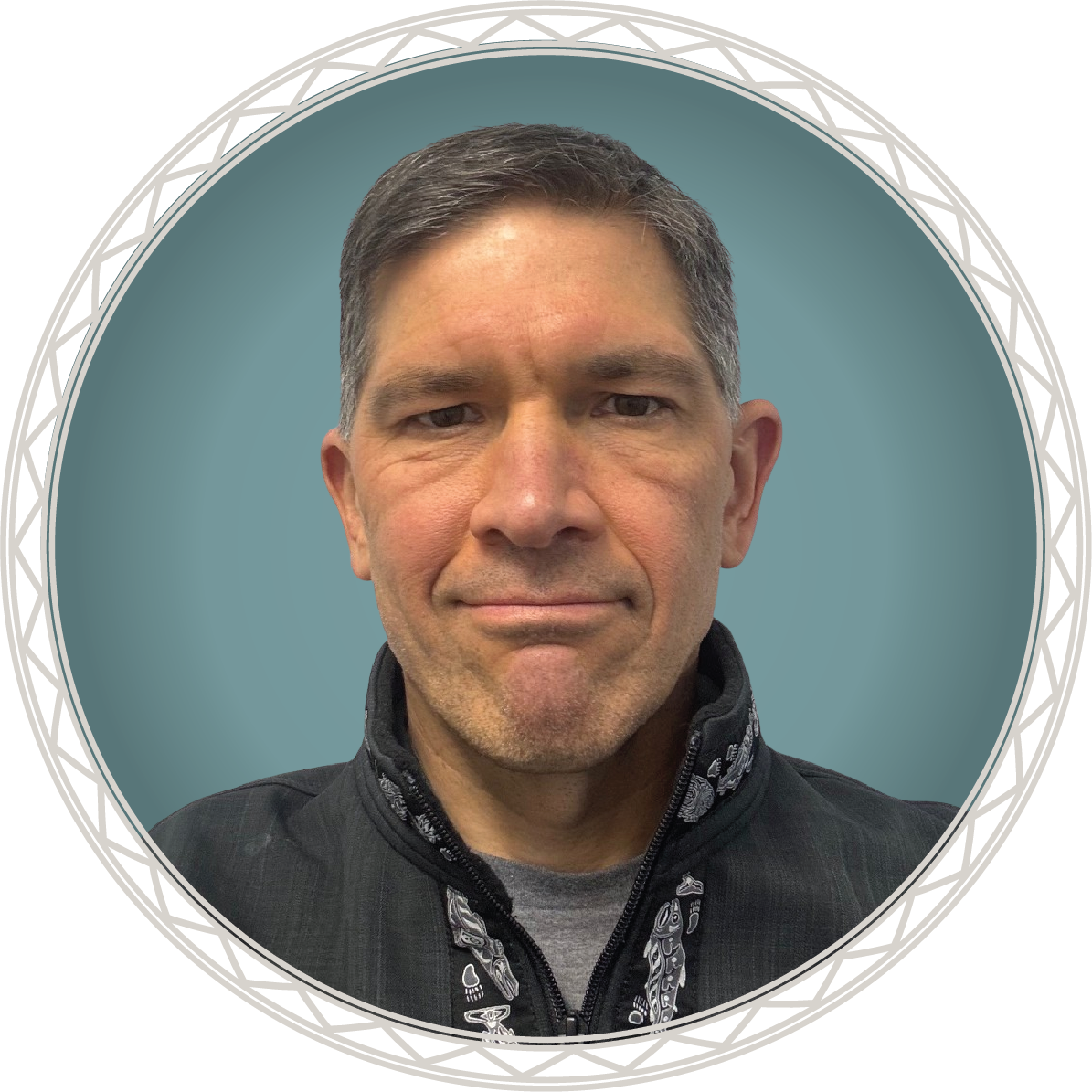
Rick Merizon
Tribal Wildlife Biologist
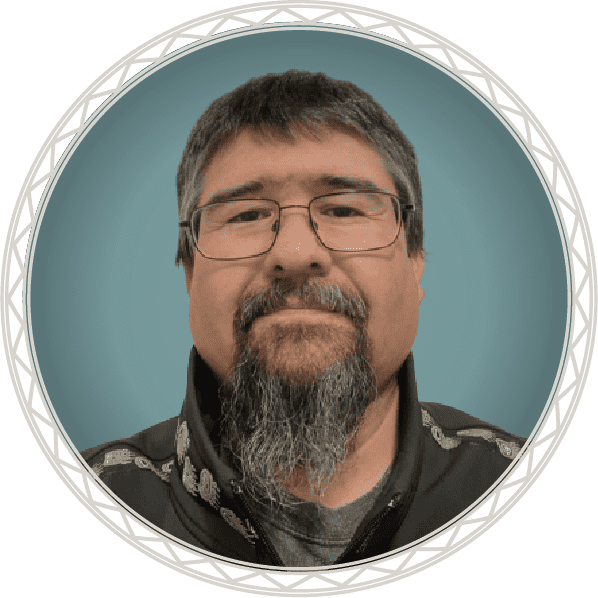
Michael Opheim
Tribal Fish & Wildlife Liaison

Shania Tanape
Tribal Special Projects Coordinator
Tribal Fish & Wildlife
Monthly Report
Keep Up with the Latest Updates!
Resources
Marine Mammal Resources
The Subsistence Harvest of Harbor Seals and Sea Lions by Alaska Natives in 2004 (psu.edu)
→ Abundance and Distribution of Sea Otters (Enhydra lutris) in the Southcentral Alaska Stock, 2014, 2017, and 2019
https://pubs.usgs.gov/of/2021/1122/ofr20211122.pdf
→ Co-Management Agreements of Marine Mammals in Alaska
Marine Mammal Co-management in Alaska | NOAA Fisheries
→ Coastal Voices Sea Otter Report
CVReport-Final.pdf (squarespace.com)
→ First Nations Perspectives on Sea Otter Conservation in British Columbia and Alaska: Insights into Coupled Human Ocean Systems
Larson-1611097 (squarespace.com)
→ Determination of Alaska Native Status under the Marine Mammal Protection Act
https://ipcommalaska.org/wp-content/uploads/MMPA-Final-Report.pdf
→ Marine Mammal Protection Act (MMPA)
Marine Mammal Protection Act – Marine Mammal Commission (mmc.gov)
Disclaimer
The information outlined regarding laws and regulations should not be used to make harvesting decisions. Please use the resource links for the full text of the laws and regulations.
The Marine Mammal Protection Act (MMPA) is the primary law governing marine mammal management in the United States. Under the MMPA management, a responsibility for sea otter management in the U.S., a responsibility that is carried out by the U.S. Fish and Wildlife Service within the Department of Interior. Under the MMPA, the Department of Commerce is responsible for pinnipeds (Steller sea lions and harbor seals), a responsibility that is carried out by the National Marine Fisheries Service (NMFS) within the National Oceanic and Atmospheric Administration (NOAA). eCFR :: 50 CFR 18.23 — Native exemptions.
The MMPA establishes a moratorium on all taking of marine mammals in the United States, including sea otters, Steller sea lions, and harbor seals. However, Section 101(b) of the MMPA provides an exemption to the moratorium for Alaska Natives. Section 101(b) conditions that take of marine mammals by Alaska Natives must be:
(1) For subsistence purposes, or
(2) For purposes of creating and selling authentic Native articles of handicraft and clothing, and
(3) In each case, not accomplished in a wasteful manner.
Hunter/Harvester Resources
Subsistence Regulation Posters
Disclaimer: The information outlined on the posters are not the full regulations and should not be used as such. These are meant to be used as summaries/reminders. Please use the resource links for the full laws and regulations.
The Guides Contain Multiple Posters for Multiple Units – Please Mind the Headers on Each Page – Enjoy!
→ BEAR Subsistence Regulation Posters
CRRC-Bear-Hunting-2022-23.pdf
→ DEER Subsistence Regulation Poster
Deer_Unit-6_Review-I-2022.pdf
→ FURBEARER Subsistence Regulation Posters
CRRC-Furbearer__Units-2022-23.pdf
→ GOAT & SHEEP Subsistence Regulation Posters
CRRC-Goat-Sheep_2022-23.pdf
→ MARINE MAMMALS Subsistence Regulation Posters
CRRC-Seals-Sea-lions-and-Sea-Otters-Posters-2022-23.pdf
→ MIGRATORY BIRDS Subsistence Regulation Posters
CRRC-Migratory-Birds_Kachemak-Bay-Area_Review-2022-23.pdf
→ MOOSE Subsistence Regulation Posters
CRRC-Moose_Units-2023.pdf
→ Alaska Department of Fish and Game
- Subsistence Hunting, Alaska Department of Fish and Game
- Hunter Education Course, Alaska Department of Fish and Game
- Harvest Data – Subsistence Information, Alaska Department of Fish and Game
→ Office of Subsistence Management
Mariculture Resources
→ Native Conservancy
https://nativeconservancy.org/
→ Alaska Mariculture Alliance
https://alaskamariculture.org/
→ Alaska Mariculture Research & Training Center
https://amrtc.org
→ Alaska Fisheries Development Foundation, Inc.
https://afdf.org
→ Green Wave
https://www.greenwave.org
→ Prince William Sound College
https://pwsc.alaska.edu/academics/natural-resources/marine-natural-resources.cshtml
Chugach Region Dictionaries & Language Curriculum
→ Eyak Dictionary
Dictionary | Eyak People
→ Sugt’stun Dictionary
Document.docx (chugachmiutheritagearchive.org)
→ Sugt’stun Curriculum
Sugt’stun for Beginners – by sakrukoff – Memrise
Chugach Region History, Culture & Heritage
→ Chugachmiut Resources Page
Resources – Chugachmiut Heritage Preservation | Chugach Heritage (chugachheritageak.org)
→ Nanwalek History
Nanwalek History | Sugpiaq Ethnohistory on the lower Kenai Peninsula of Alaska
→ THE ALUTIIQ ETHNOGRAPHIC BIBLIOGRAPHY
http://www.ankn.uaf.edu/ANCR/Alutiiq/RachelMason/index.html
→ Our Changing Sea
Salomon+et+al.+2011+Our+Changing+Sea.pdf
Chugach Artists/Businesses & Handicrafters
→ Support Chugach Natives
Support Chugach Natives
→ Handicraft Guide: What International travelers, shop owners, and artisans need to know
customs_guide_to_ak_native_arts.pdf (alaska.gov)
Hunting and Using Moose (Tegllit) in Nanwalek and Port Graham, Alaska
https://tinyurl.com/2keyhsh7
Moose (tegllit in Sugt’stun/Alutiiq) remain central to the traditional food system in Nanwalek and Port Graham, Alaska, where a small number of animals are harvested annually and shared among community members. Despite deep-rooted knowledge, tribal practices are constrained by regulations that do not always reflect this expertise. This study combines archaeological, ethnographic, and biological evidence to document customary and traditional moose use, including harvest data, oral histories, processing methods, and patterns of sharing. Findings highlight the cultural importance of moose and the multi-generational connections to land and waters, while underscoring ongoing efforts to regain access to traditional hunting areas.
Rick Merizon
Tribal Wildlife Biologist
Since 2025
Rick thoroughly enjoys building connections, relationships, and engagement around our natural world. He grew up in Wisconsin and completed his undergraduate in Wildlife Ecology and Masters in Biology. During that time, he met and married his wife before moving to Alaska in the late 1990s. He then began his career with the Alaska Department of Fish and Game (ADF&G) from which he recently retired. While with ADF&G he worked and lived throughout Alaska as a fishery biologist, the statewide Small Game Program, and finally retiring as Assistant Director of the Division of Wildlife Conservation. Rick has also recently been a coach for a national conservation leadership program, as well as started his own business as a health and leadership coach. He began work with the CRRC in late 2025 and is very excited to work with others to stay connected to the landscape and engage the regulatory process to ensure that connection is durable and robust. More than anything, he loves spending time with his wife and kids in the wilds of Alaska as well as trail running, sea kayaking, and hiking.
Hanna Hellen
Tribal Marine Mammal Biologist
Since 2024
Hanna received her B.S. from University of Alaska Fairbanks in Fisheries and Ocean Science with a minor in Biology. She will complete an M.S. in Marine Biology from the University of Alaska Fairbanks in 2026 and is researching the reaction of female northern fur seals to disturbance events. She has a background in marine mammal research and co-management through her work with the Aleut Community of St. Paul Island.
Shania Tanape
Tribal Special Projects Coordinator
Since 2024
Shania Tanape is the Tribal Special Projects Coordinator and helps support CRRC’s Tribal Fish & Wildlife Department to build Tribal capacity within the Chugach region for successful subsistence advocacy and management. Shania supports the Subsistence Alliance and maintains ongoing relationships with the Tribes so our team can better understand the needs of the communities. Additionally, she supports the Fisheries, Wildlife, Marine Mammal, and Subsistence Programs within the Tribal Fish & Wildlife Department.
Madeline Lee
Tribal Fish Biologist
Since 2023
Madeline received her B.A. from Colorado College in Environmental Science with a minor in Computer Science. She received her M.S. in Fisheries from the University of Alaska Fairbanks. Her thesis research assessed adult Chinook salmon heat stress and reproductive consequences in Southcentral Alaska. In addition to fisheries, Madeline has a strong background in GIS and is passionate about making science easy to understand using story maps. Madeline serves on the board of Cook Inlet Aquaculture Association as a representative for Nanwalek and Port Graham and sits on the Kachemak Bay Research Reserve Community Council.
Christine (Brummer) DeWeese
Tribal Fish & Wildlife Coordinator
Since 2021
Christine (Brummer) DeWeese, the Tribal Fish & Wildlife Coordinator at CRRC, works on regulatory advocacy for CRRC’s seven Tribes to the Board of Fish, Board of Game, Federal Subsistence Board, Southcentral Regional Advisory Council, and North Pacific Fishery Management Council. The mission is to protect Alaska Native hunting and fishing rights and ensure traditional land and resource management.
Mrs. DeWeese has a BA in Anthropology, a BA in Environmental Studies, and an MA in Applied Cultural Anthropology from the University of Alaska Anchorage (UAA). Her graduate research, “Who is Rural Alaska? A Case Study of Rural Community Practice,” focused on people’s perceptions of community and ruralness within the Moose Pass area of Southcentral Alaska. Christine has interned for the National Park Service, Office of Environmental Policy and Compliance, and the Fish and Wildlife Service: Office of Subsistence Management.

Beks Rumley
Climate Change Coordinator
Since 2025
Beks is passionate about natural resource management and conservation, with nearly five years of experience in the nonprofit world. She specializes in designing programs that bring communities together while promoting sustainable practices and environmental stewardship. From organizing local events to leading hands-on learning initiatives, Beks loves making climate and energy education fun and accessible for everyone. Living and working in Alaska has fueled her dedication to finding climate-driven solutions that protect the region’s unique ecosystems and support its communities. She also advocates for sustainability by helping shape policies that drive long-term ecological impact and inspire lasting change. Whether she’s brainstorming her next big idea or connecting with the community, Beks is all about building stronger, more resilient communities. When she’s not at work, you can probably find her skiing or exploring the great outdoors.
Michael Opheim
Tribal Fish & Wildlife Liaison
Since 2022
Michael Opheim is the Tribal Fish and Wildlife Liaison. He works to build Tribal capacity within the Chugach region for successful subsistence advocacy and management, working in collaboration with Tribal, state, federal, and private entities. Michael also performs duties associated with CRRC’s Subsistence Alliance, including reviewing proposals and meeting materials to disseminate to the Subsistence Alliance.
Michael spent almost 19 years working for the Seldovia Village Tribe as their Environmental Coordinator. He and his staff worked on various projects, such as ambient air quality, ocean acidification, silver salmon restoration, clam projects, fish consumption survey of Cook Inlet Tribes, culture camps, e-waste, water quality in Seldovia Bay, water quality on local streams, dead and injured animal recovery, indoor air quality, and recycling. Michael sits on the Kachemak Bay Research Reserve Community Council, Cook Inlet Regional Citizens Advisory Council, Seldovia Advisory Committee, and the Southcentral Regional Advisory Council.
Dustin Carl
Tribal Fish & Wildlife Director
Since 2022
Dustin Carl is the Tribal Fish & Wildlife Director. He coordinates CRRC’s Invasive Species Program in partnership with the Homer Soil and Water Conservation District, the Wetlands Program funded with CRRC’s partners at UAA and the EPA, and the Kachemak Bay Watershed Collaborative with CRRC’s Climate Change Coordinator and partners at the Water Policy Council. Dustin has worked on several projects, including updating CRRC’s subsistence regulations posters, providing support to the Nanwalek Fisheries Projects, conducting research to update population and composition estimate data for moose in the Lower Cook Inlet with the Port Graham Village Council, and monitoring the spatial distribution of Pacific herring in the Prince William Sound through eDNA analysis with the APMI staff.
Dustin attended the University of Alaska Anchorage, where he earned a bachelor’s and a master’s biological sciences. His thesis is titled “Genomic Variation of Red-faced Cormorants in the Aleutian Archipelago and Bering Sea.” He has gained experience working on projects that include different salmon, moose, black and brown bears, seabirds, and marine mammal species throughout Alaska.
Raven Cunningham
Tribal Fish & Wildlife Director
Since 2021
Raven received her bachelor’s degree in Alaska Native studies and Rural Development with a concentration in Natural Resource Management from the University of Alaska Fairbanks. She has extensive professional Tribal government and ANSCA corporation experience combined with a lifetime of local knowledge of Alaska’s history and natural resources. Mrs. Cunningham also has extensive knowledge on the Marine Mammal Protection Act, Alaska Native Claims Settlement Act, and the Alaska National Interest Lands Conservation Act. She currently sits as Vice Chair on the Native Village of Eyak Tribal Council, sits on the Native Village of Eyak Natural Resource Advisory Council, as well as the Exxon Valdez Oil Spill Public Advisory Committee as the Conservation and Environmental rep. Raven also owns her own small business, Made by Raven, creating garments, jewelry, and accessories from local, sustainable resources.

Willow Hetrick-Price
Executive Director
Since 2019
Willow Hetrick-Price is the Executive Director of CRRC. She is responsible for the nonprofit Inter-Tribal Fish and Wildlife Commission, which is involved in projects and programs related to natural resources, subsistence, climate change, environmental management and research, in addition to community economic development related to natural resources and the environment. She is also responsible for identifying funding sources and developing funding proposals with and on behalf of the Tribes of the Chugach region. Willow serves on the Board of the Prince William Sound Stewardship Foundation as Secretary and the Anchorage Advisory Committee to the Boards of Fish and Game as Secretary.
Willow has a bachelor of science degree in marine resource management (2006) with a certificate in aquaculture (2006) and a master of science degree in natural resources and environmental management (2009), both from the University of Hawaii at Manoa. She has a graduate certificate in environmental regulations and permitting (2018) from the University of Alaska Anchorage and a master’s of public administration with a focus on natural resources (2018) from the University of Alaska Southeast. She has 14 years of professional experience combined with a lifetime of local knowledge of Alaska’s natural resources and natural resource development history. Willow has experience collaborating on projects with stakeholders at the state, federal, public, and NGO level.