NANWALEK SALMON
ENHANCEMENT
Projects & Studies
Nanwalek Salmon
Enhancement Project
The English Bay Lakes (EBL) System is located on the Kenai Peninsula near the Native Village of Nanwalek. Salmon that return to this system are an invaluable resource to the Nanwalek people for cultural connection, community health, well-being, and subsistence. Nanwalek has collected data on salmon enumeration and escapement of the English Bay Lakes system since the early 1920s with federal and state management using spruce trees and root ties for fish weirs. A downward trend in escapement of EBL sockeye has led to numerous evaluations by external entities to determine factors that could be impacting the decline. However, these evaluations lacked community integration, self-determination, and autonomy within the fishery science and management process. In 1992, the Native Village of Nanwalek established the Sockeye Enhancement Program due to the growing concern about sockeye salmon returns. Nanwalek had been operating the Sockeye Enhancement Program in the English Bay River, which produced nearly 300,000 adults. This allowed for the reestablishment of the commercial fishery and greatly enhanced the subsistence fishery.
Nanwalek
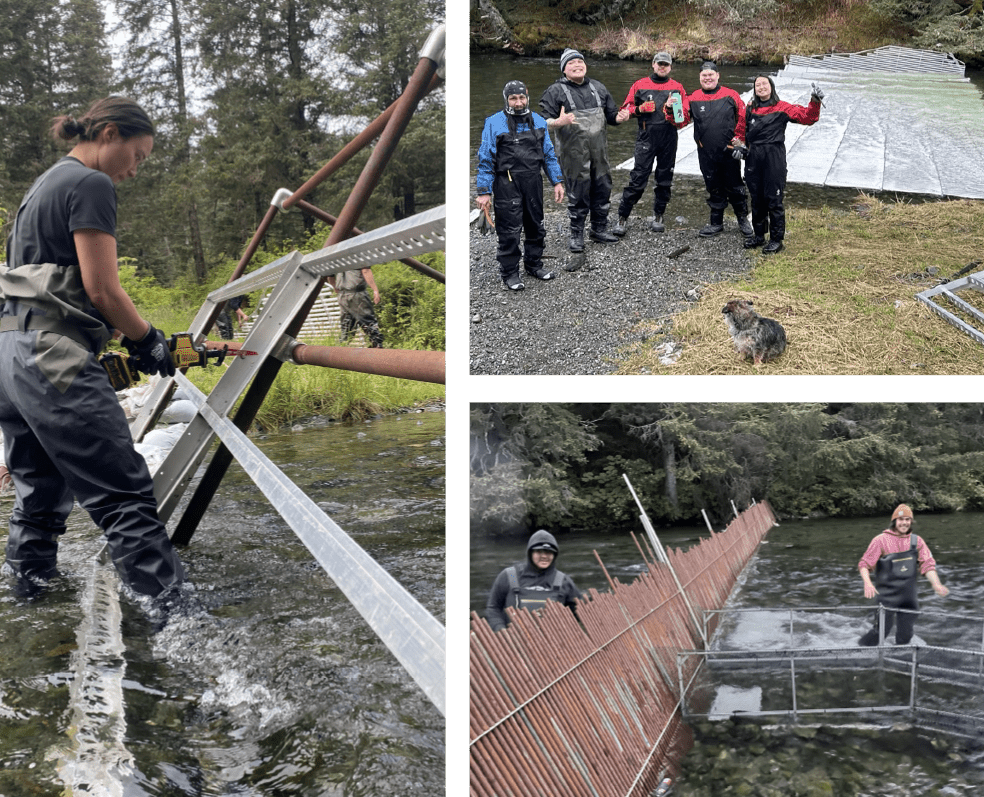
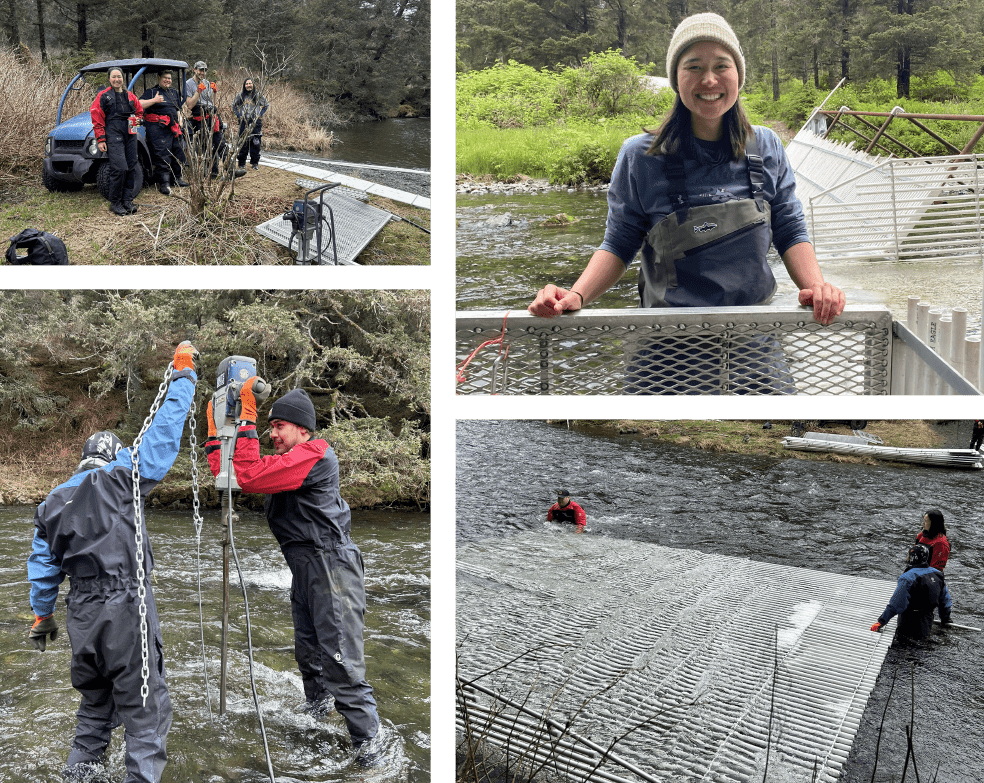
Fish Weir
Nanwalek Salmon Enhancement Program
Major timelines from the last 103 years are presented below. What remains steadfast is CRRC’s financial and programmatic commitment to the Nanwalek IRA Council for their Nanwalek Salmon Enhancement Program because this system is not only crucial to ensuring food security for Nanwalek but for salmon return numbers collected by the technicians’ drive harvest data for the Alaska Department of Fish and Game.
Timeline
1920s
Monitoring of the English Bay Lakes system goes back into the 1920s with federal management and, after statehood, Alaska Department of Fish and Game.
1920s–1992
Nanwalek operated a sockeye enhancement program in the English Bay River that produced nearly three hundred thousand adults to attempt to reestablish a commercial fishery and provide cost recovery.
Unanticipated disease problems during the lake-pen smolt-rearing portion of the enhancement project had reduced production and the Alaska Department of Fish and Game became concerned that the disease problem may have an adverse impact on the other fish in the English Bay River system. Alaska Department of Fish and Game later ordered the project to develop a disease-free water source for rearing smolts, and unless a disease-free water source could be developed, the project would have to be shut down.
1992
Sockeye Enhancement Program established by the Tribe. Nanwalek residents were concerned about red salmon returns and worked with CRRC to secure funding to install a weir, count fish, and conduct egg takes.
1994
CRRC became integrally involved in the Nanwalek Salmon Enhancement Program and started writing grants to help fund the weir and other objectives of the Nanwalek Salmon Enhancement Program.
1994-1996
Fisheries technicians were taking eggs from the English Bay Lakes to Port Graham Hatchery, where they were raising them to a fingerling size, and then transporting them to English Bay Lakes (Nanwalek). Nanwalek fisheries technicians kept them in net pens all summer long to be released in the fall. This worked for a period of time, but eventually red salmon developed infectious haematopoietic necrosis (IHN) and had to be destroyed.
1999
Red salmon developed IHN again. Fish and Game didn’t want Nanwalek to use a pen system where the salmon were all congregating in one area of the lake.
1999
Nanwalek’s Sockeye Return Improvement Project proposal was submitted to the Administration for Native Americans on October 8. As part of the grant, the Port Graham Hatchery was to increase the egg to emergent fry survival rate from 45 percent to at least the industry standard of 70 percent. Vincent Kvasnikoff, First Chief for the Nanwalek IRA Council at the time, supported the project by committing biological technical assistance for project personnel and a liaison with the Alaska Department of Fish and Game as the project progressed as well as an in-kind contribution to the project.
2001
The Nanwalek Salmon Enhancement project coordinator and the project supervisor at the Alaska Department of Fish and Game pathology lab in Anchorage attended the Alaska Hatchery Managers meeting in Girdwood, Alaska, as well as a Fish Pathology workshop in March.
2001-03
CRRC initiated the English Bay River Habitat Restoration Project, working directly with the Nanwalek IRA Council to address important salmon habitat restoration issues for the English Bay River system. The goals included evaluating and providing a damage assessment for the purpose of rehabilitating the English Bay River drainage habitat including English Bay Second Lake, English Bay River, and English Bay River lagoon. The project was to specifically address problems resulting from habitat damage and degradation due to human impacts, primarily transportation related. This project was not funded.
2014
Cook Inlet Aquaculture Association purchased the Port Graham Hatchery in 2014 and put it back into operation. This is a pink salmon facility with the capacity to rear 84 million eggs based on current water availability. Fish are reared in the facility until they reach the fry stage, and then they are temporarily reared in net pens in front of the hatchery. On average, the time in the net pens is two months before they are released to the open ocean. The following year, we would expect to see about two million adult pink salmon return.
2014-16
CIAA joined the Nanwalek Salmon Enhancement Program and provided technical support and training in the enumeration efforts, conducting limnology sampling, and analyzing the historic data. CIAA had expressed interest in using the Nanwalek brood stock at Port Chatham. Because of genetic concerns, only “wild” fish can be stocked into Nanwalek as smolts, and enhanced fish can be used for Port Chatham and other Lower Cook Inlet programs. This proposal seemed to be well received by the Nanwalek representatives, especially since it involved only around five hundred broodfish.
2016
Citizens of Nanwalek began expressing concerns about the perceived diminishing adult returns and the need to provide more fish for the expanding population of Nanwalek. This concern triggered CRRC to sponsor a monitoring program and instigate a planning process to develop a long-term sustainable program to address these concerns. now centers on CRRC funding a smolt and adult count and transportation for limnology.
2017
The Nanwalek IRA Council initiated discussions with the Alaska Pacific University FAST Lab regarding their concern about the decline of sockeye in the English Bay Lakes system. APU conducted water and environmental DNA (eDNA) sampling in various locations around the river and lake system of Nanwalek.
2017
Cook Inlet Aquaculture Association traveled to Second and Third Lakes for the purpose of collecting limnological samples as a result of a meeting they had in 2016 with members of the Nanwalek IRA Council, who were concerned about the health of the sockeye salmon population in those lakes.
2021
CRRC received funding from the National Fish and Wildlife Foundation to support the Nanwalek Salmon Enhancement Program by purchasing a new resistance board weir at the request of the Nanwalek IRA Council.
2023
CRRC continued the Habitat Restoration Project with support and guidance from the U.S. Fish and Wildlife Service to remove derelict weir and net pen material from English Bay Lakes and River.
2024
In 2024, the Nanwalek Salmon Enhancement Program expanded efforts to document community knowledge and strengthen salmon monitoring. Through a partnership with Alaska Pacific University and the Center for Braiding Indigenous Knowledge and Science, Nanwalek interns conducted filmed interviews with Elders and local fisheries experts to document Traditional Ecological Knowledge about salmon. The program also continued annual salmon monitoring through the Nanwalek weir, participated in the regional Fisheries Work Group process, and began planning for a bridge across the English Bay River with the Natural Resources Conservation Service to protect salmon habitat along the Dogfish Bay trail.
2025
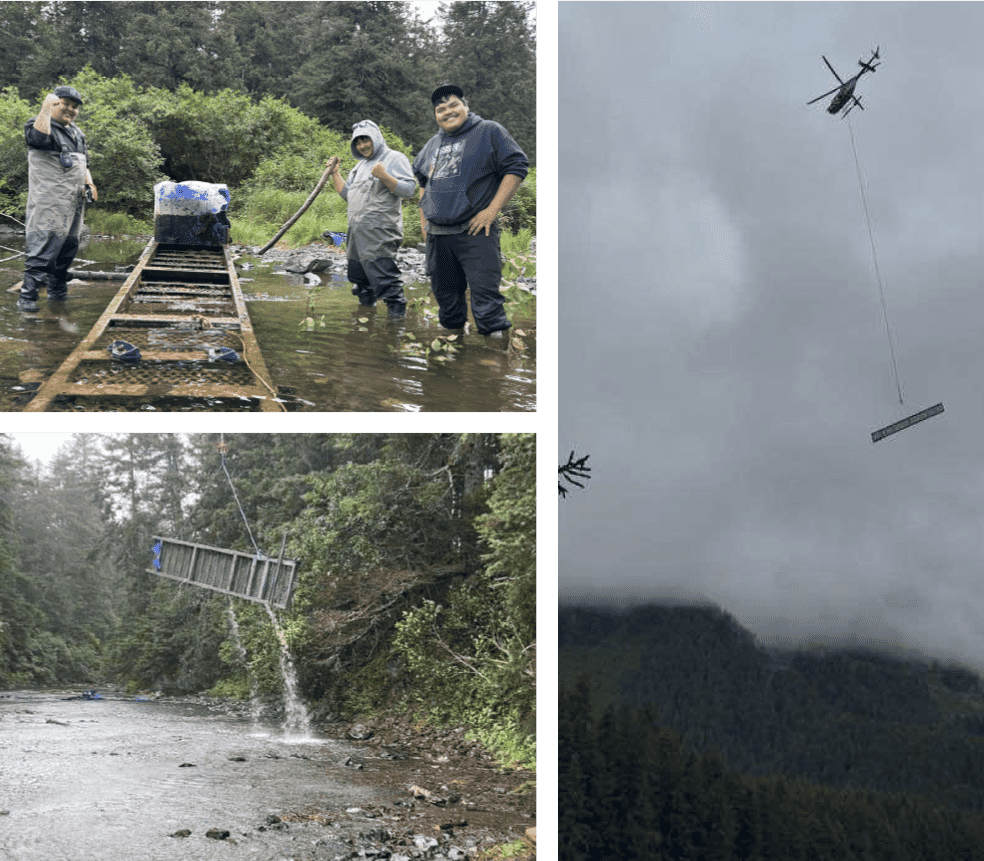
In 2025, a long-standing habitat restoration priority was completed with the removal of abandoned hatchery net pens from the English Bay Lakes system through a partnership with the U.S. Fish and Wildlife Service. These deteriorating structures had remained in the lakes for more than a decade and were removed using helicopter support to restore salmon habitat. Additional progress was made on the planned English Bay River bridge, including a geotechnical survey and engineering design work to move the project closer to construction.
2026
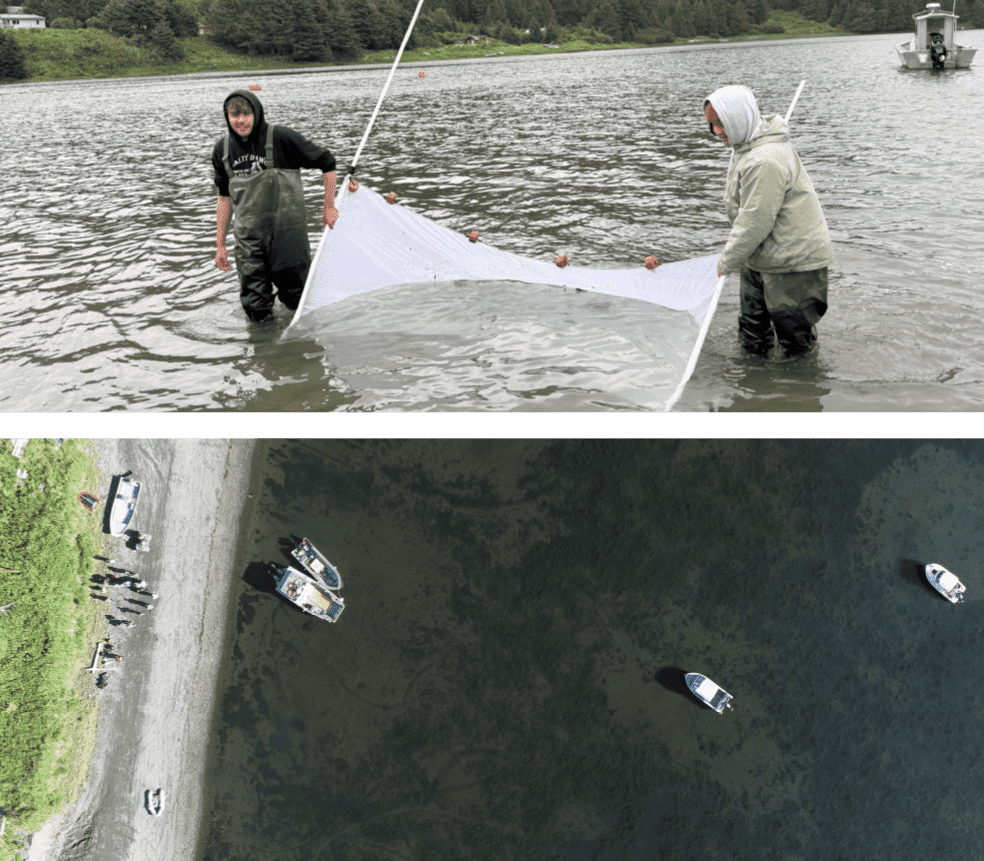
Beginning in 2026, the program is expanding into coastal habitat and watershed restoration projects. Community members in Nanwalek will participate in a multi-year eelgrass monitoring effort after Elders raised concerns about changes in eelgrass health in the Nanwalek Lagoon. At the same time, work will begin on restoring the historic trail to Dogfish Bay, improving subsistence access while upgrading culverts, stabilizing erosion, and protecting important salmon habitat in the English Bay watershed.
Many organizations and grant funds have supported this project over the years, including the Bureau of Indian Affairs, Alaska Department of Community and Economic Development, Alaska Pacific University, Alaska Department of Fish and Game, National Fish and Wildlife Foundation, National Science Foundation: Center for Braiding Indigenous Knowledge and Science, U.S. Fish and Wildlife Service, Alaska Sustainable Salmon Fund, and Alaska Conservation Foundation.
Fishery
Working Group
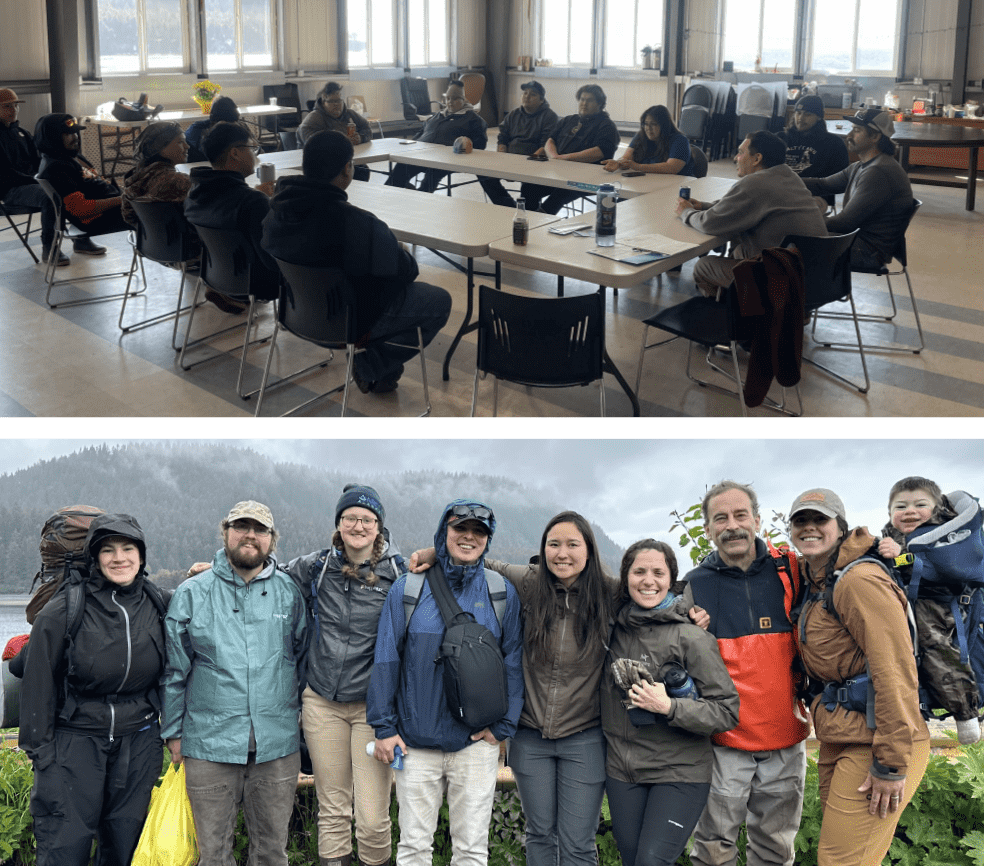
Over time, project partners have come together to address community research questions and fishery monitoring priorities. As partners in these activities, CRRC and Nanwalek recognized that building and sustaining relationships is critical for project longevity and sustainability. In service to this goal, we formalized our partnership in 2019 through the creation of a Fishery Working Group (FWG), comprised of Nanwalek IRA Council, Elders, youth, fishermen, and community members; the Alaska Pacific University FAST Lab; the Chugach Regional Resources Commission; and fishery biologists from the Alaska Department of Fish and Game in Homer. The FWG is designed to bring individuals with relevant knowledge and skills together to accomplish ongoing and future project goals and objectives. The overarching purpose of the FWG is to provide a platform for authentic participation and direct community involvement regarding the management of the English Bay Lakes system fishery.
Documenting Nanwalek Salmon Traditional Ecological Knowledge
A key part of the Nanwalek Salmon Enhancement Program is documenting Traditional Ecological Knowledge (TEK) about salmon and local fisheries in Nanwalek. In partnership with the NSF: Center for Braiding Indigenous Knowledge and Science, Nanwalek interns conducted 17 filmed interviews with Tribal members and community fisheries experts. These conversations document the history of the Nanwalek weir program, changes in local fisheries, and the deep cultural connection between the community and salmon. The interviews are being transcribed and will support educational materials, future outreach, and a short documentary film that shares community knowledge and highlights Nanwalek’s long tradition of salmon stewardship.
Learn more about the community’s work to restore and care for salmon in this short film.
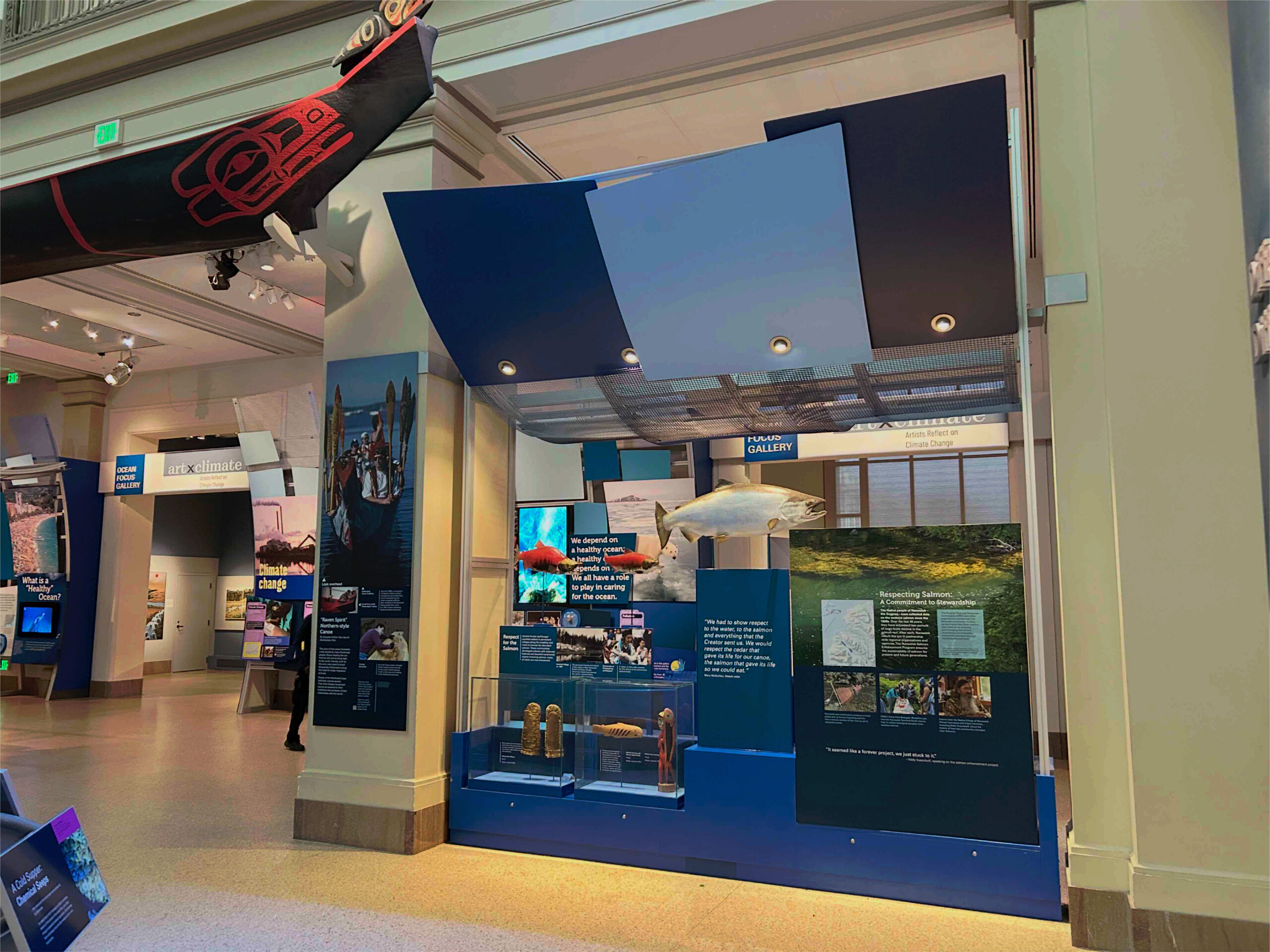
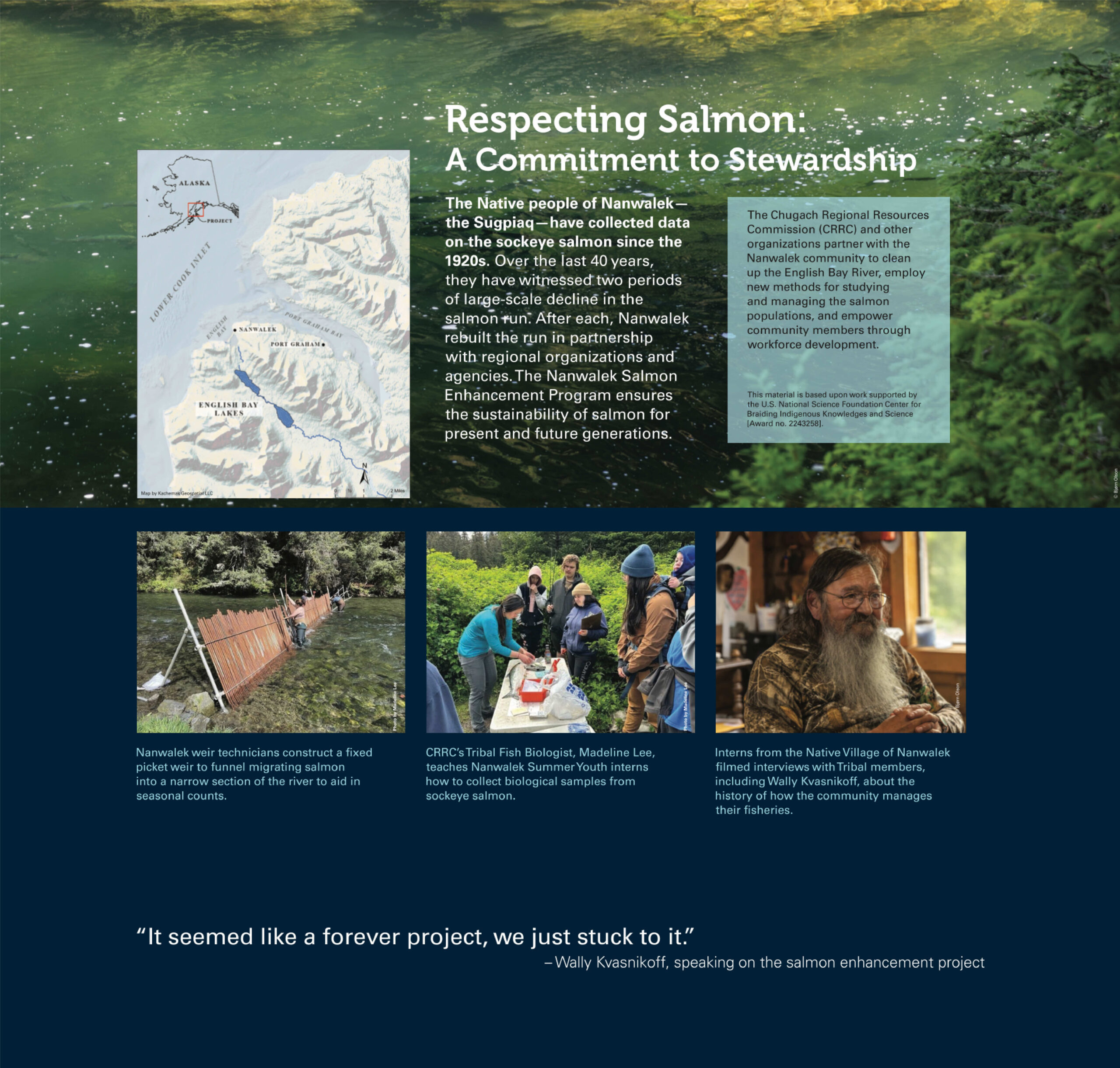
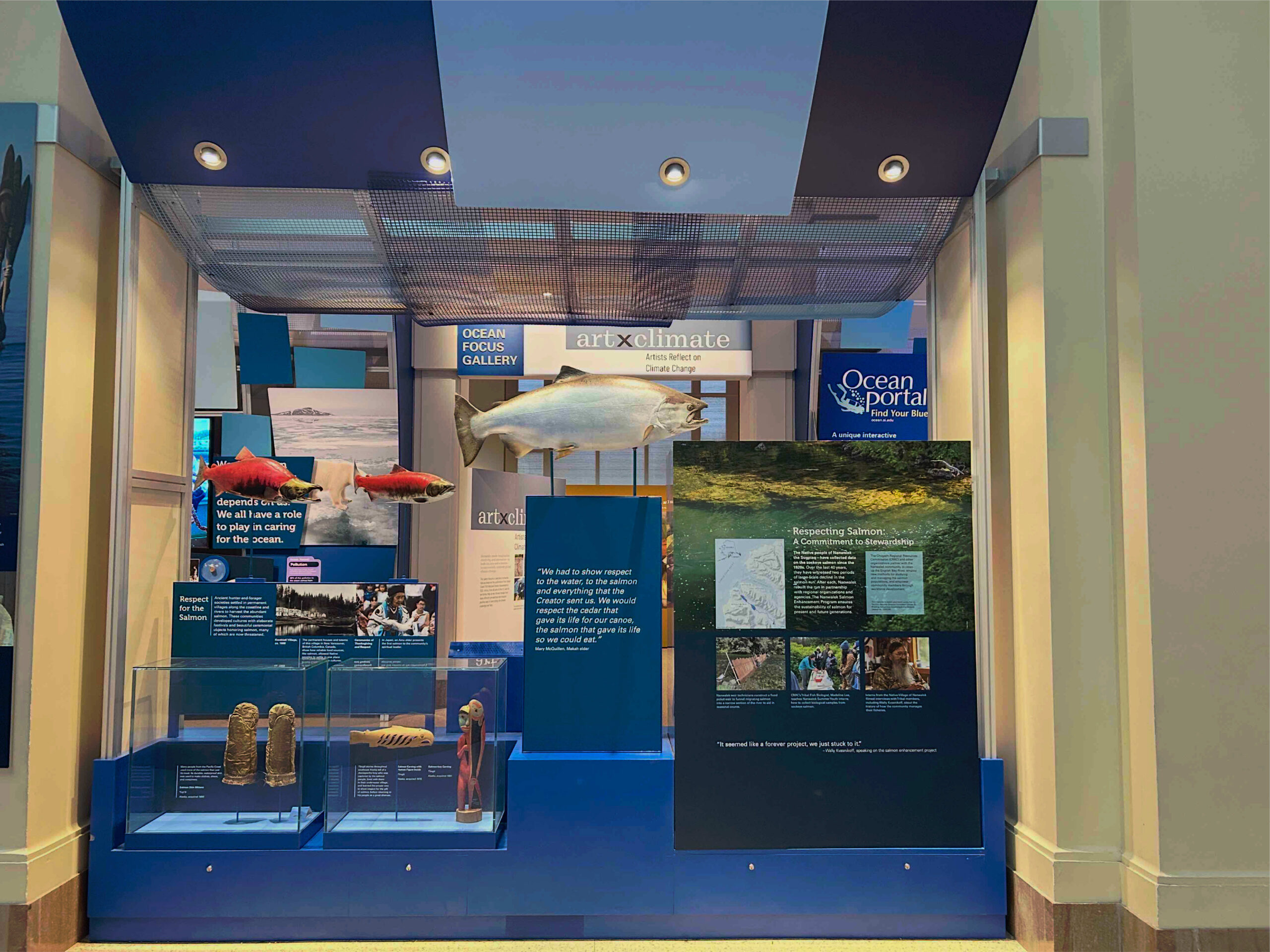
Respecting Salmon: A Commitment to Stewardship
Nanwalek Smithsonian Exhibit
The Native people of Nanwalek-the Sugpiaq -have collected data on-the sockeye salmon since the 1920s. Over the last 40 years, they have witnessed two periods of large-scale decline in the salmon run. After each, Nanwalek rebuilt the run in partnership with regional organizations and agencies. The Nanwalek Salmon Enhancement Program ensures the sustainability of salmon for present and future generations.
Net Pen Removal &
Habitat Restoration
In 2025, the Nanwalek Salmon Enhancement Program successfully completed the removal of these net pens through a partnership between the Chugach Regional Resources Commission and the U.S. Fish and Wildlife Service. Local crews, marine contractors, and helicopter operations dismantled and removed the structures, restoring lake habitat and improving fish passage.
Much of the salvaged material was repurposed locally to improve trails, replace a culvert that had been blocking fish passage, and support future community infrastructure projects. The effort removed long-standing debris from the watershed while directly benefiting both salmon habitat and the Nanwalek community.
Dogfish Bay
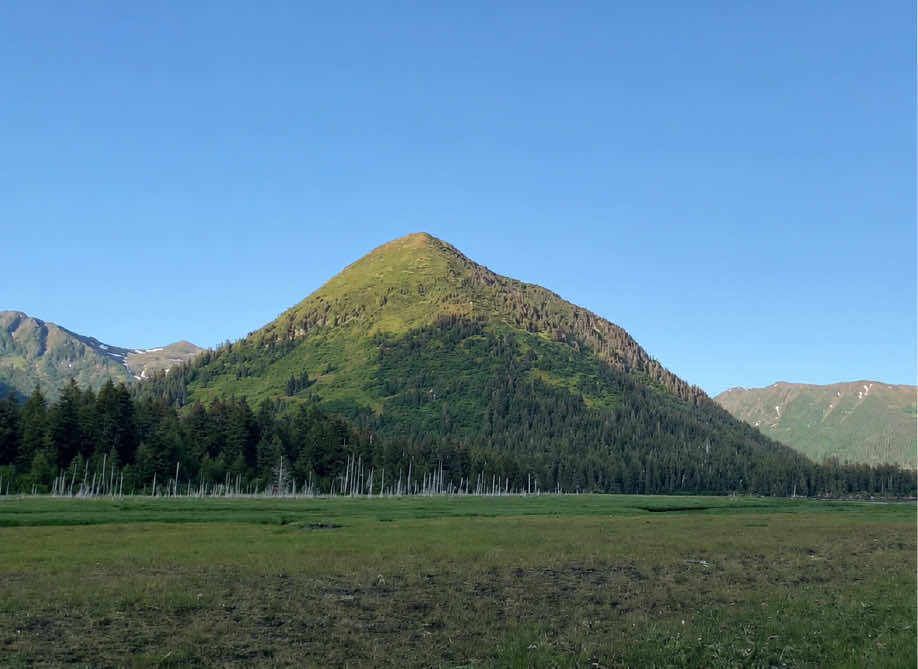
Trail Restoration
Eelgrass Monitoring
(2026–2028)
Eelgrass provides important habitat for juvenile salmon and other marine life, and local Traditional Ecological Knowledge highlights its role in supporting species such as Pacific tomcod that Tribal members harvest for food. The project will map eelgrass beds, monitor water quality, and assess estuarine habitat conditions to better understand how these coastal ecosystems support subsistence fisheries and how they may be changing over time.
By combining community knowledge with scientific monitoring, this effort will help inform future habitat protection and restoration in the Nanwalek Lagoon and across Lower Cook Inlet.